Morning Brief
2026-04-30 · 18 sources
Claude Design and ChatGPT Images 2.0 just made design a prompt away while the agentic-coding crowd races to ship apps with zero human keystrokes.
What Creators Are Saying

Nate Herk | AI Automation
Nate's gone all-in on Claude — a two-hour Claude Design masterclass, Claude Code productivity hacks, and a Playwright-to-Claude Code wiring tutorial worth stealing for your own browser automation.
3 videos

Claude Design Masterclass: Websites, Videos & More (2 Hours)
Two-hour masterclass on Anthropic's new Claude Design tool.
Step-by-step walkthrough of building an entire brand — logo, guidelines, pitch deck, website, mobile prototype, launch video — in Claude Design, with concrete tactics to avoid burning your session limit.
details
What it is: A 2-hour, three-act masterclass (Foundations → Builds → Habits) where Nate ideates a fictional company and ships its full brand stack inside Claude Design, Anthropic's new visual-design product powered by Opus 4.7.
How it works:
- Act 1 — Foundations: What Claude Design is, where it sits in the Anthropic ecosystem (separate app from Claude Chat, Claude Code, Co-work), and initial setup.
- Act 2 — Builds: Real end-to-end scenario — ideate a brand → build logo + brand guidelines → generate pitch deck → website → mobile app prototype → launch video, all in Claude Design plus a few supporting tools.
- Act 3 — Habits & Limits: Claude Design has its own session limit, separate from regular Claude / Claude Code. Model picker exposes *All models*, *Sonnet only*, and a *Claude Design-specific* limit — Nate's whole emphasis is being strategic about which model to invoke so you don't burn through quota.
- Vision-model loop: Opus 4.7 powers the surface and actually *looks* at the rendered page to self-validate output (catches its own visual mistakes before handing back).
- Import existing assets: Drop in current brand assets, sites, or apps and Claude Design builds a reusable design system around them so future outputs stay on-brand (colors, fonts, components).
- Export paths: Push designs out to Claude Code, Canva, raw HTML, or zip — the "Figma killer" framing comes from sharable design systems across a team.
- Release context: Claude Design launched April 17, 2026 as an Anthropic Labs product, one day after Opus 4.7 dropped.
Tools & links:
- Claude Design — Anthropic Labs visual-design surface (websites, slides, prototypes, one-pagers, animations, videos)
- Claude Opus 4.7 — vision model powering Claude Design's see-and-validate loop
- Claude Code — export target for handing designs to engineering
- Canva — export target for non-dev workflows
- AI Automation Society Plus (paid) — Nate's full course + support community
- AI Automation Society (free) — free resource hub
- Nate's YT Podcast application
Why it matters for you: This is the instructive deep-dive Nate's channel is built for — a full repeatable pipeline (brand → deck → site → app prototype → video) you can lift directly, plus the non-obvious gotcha that Claude Design has its own quota and model selector you need to manage if you want to actually ship without tapping out mid-project.

32 Tricks to Level Up Claude Code in 16 Mins
Beginner-to-advanced Claude Code productivity hacks.
Rapid-fire Claude Code workflow tricks you can copy into your own coding sessions today, with concrete slash commands and context-management tactics.
details
What it is: A 16-minute speedrun of 32 Claude Code tricks ranging from basic setup to power-user context management, framed as Nate's own progression from beginner to shipping apps, sites, and agents in real time.
How it works (beginner hacks covered in transcript excerpt):
- `/init` every project — Claude scans your codebase and generates a `CLAUDE.md` cheat sheet mapping architecture, conventions, and key files so you stop re-explaining the project each session. For new projects, have Claude help you author `CLAUDE.md` from goal + stack + rules.
- Set up a status line — Run `/statusline` and tell Claude what you want pinned at the bottom of the terminal (model, context %, cost). Acts as a mini dashboard so you can watch context burn and avoid context rot.
- Voice input — Native `/voice` command is rolling out in Claude Code; alternatively use a system-wide dictation app (Nate's pick is linked in his video description) to talk-to-code anywhere.
- Keep context small — Don't dump the whole repo. Break big problems into focused steps; less noise = better outputs.
- `/context` to find token bloat — Breaks down what's eating tokens (system prompt, file contents, MCP servers) by percentage so you can diagnose and restructure bloated sessions.
- Compact at ~60%, clear between tasks — `/compact` compresses history so you can keep going without losing critical info. You can pass instructions like `/compact but keep all API integration decisions and database schema`. Use `/clear` when fully switching tasks — `CLAUDE.md` and project files persist.
- Always start in plan mode — Shift+Tab cycles modes. In plan mode Claude reads/researches but won't write code; it outlines steps, asks clarifying questions, and maps the approach. Approve the plan, then execute. Shown to dramatically reduce correction loops.
- Treat Claude like a junior dev — Frame requests as problems ("How should we handle growth tracking?") instead of direct commands so it reasons through assumptions; ask it to explain its decisions for higher-quality output.
Note: The transcript snippet cuts off mid-hack #8 of 32 — the full video continues into intermediate and advanced power-user territory (the "best ones saved for the end").
Tools & links:
- AI Automation Society Plus (paid) — Nate's full courses + support community
- AI Automation Society (free) — Free resources
- Nate's YT podcast application
- Uppit AI — Nate's agency for done-for-you work
- Claude Code slash commands referenced: `/init`, `/statusline`, `/voice`, `/context`, `/compact`, `/clear`, plan mode (Shift+Tab)
Why it matters for you: This is exactly the instructive, copy-the-workflow content you watch Nate for — concrete Claude Code commands and context-hygiene habits you can drop straight into your daily coding loop, no agency stack required.

Claude Code + Playwright Automates Literally Anything
Wire Playwright CLI to Claude Code for browser automation.
Step-by-step on giving Claude Code real browser control so it can QA your apps, scrape contacts, and operate logged-in sessions — exactly the kind of repeatable agent workflow worth stealing.
details
What it is: A walkthrough of pairing Claude Code with Playwright CLI to automate three concrete browser tasks: QA-ing a web app, scraping dentist contact info, and operating a logged-in session (his Skool account).
How it works:
- Starts in a fresh Claude Code project folder (`browser-automation-demo`) with nothing in it
- Drops into plan mode and tells Claude Code to research browser automation options, pick one, and install it — Nate landed on Playwright CLI after trying Chrome DevTools MCP
- Key reason for ditching Chrome DevTools MCP: `/context` showed it eats massive tokens because every tool ships with its own description. Playwright CLI is leaner.
- After plan approval, Claude Code initializes the project, installs Playwright, writes a demo script, opens a page, and saves a screenshot to verify the install
- Runs `/init` to generate a `CLAUDE.md` so the environment is documented for future runs
- Use case 1 (QA loop): Has Claude Code build a multi-page form (one question per page — first name, last name, phone, business, ~8 onboarding questions), then re-enters plan mode to have Claude Code itself test the form via Playwright, find bugs, suggest fixes, and patch itself — fully hands-off
- Use case 2 (lead scraping): Search for dentists and pull their contact info via browser automation — works for sites without APIs
- Use case 3 (authenticated sessions): Demonstrates browser automation inside a logged-in Skool account, answering the common question of whether agents can drive auth'd flows
- Pattern he emphasizes: pair the generated Playwright scripts with a Claude skill so the open-browser-and-do-X flow becomes consistent and repeatable across runs
Tools & links:
- Playwright CLI — the browser automation framework Claude Code drives
- Claude Code — the agent doing the planning, coding, and execution
- Chrome DevTools MCP — tried and rejected for being token-heavy
- AI Automation Society Plus (paid)
- AI Automation Society (free)
- Nate's YT podcast application
- Uppit AI (work with Nate)
Why it matters for you: This is exactly the instructive, copy-this-workflow content you watch Nate for — a clear recipe for self-testing apps and automating any web task without an API, plus a useful token-cost tip (CLI > MCP when the MCP is bloated).
1 previously covered


NetworkChuck
Just a CCNA cohort promo — skip it, no homelab or AI workflow content this round.
1 videos
Learn networking with REAL labs 👉 Join the Summer of CCNA
Promo for free Summer of CCNA cohort.
Skip — this is a course ad, no home lab or AI workflow content.
details
What it is: A promo for NetworkChuck Academy's Summer of CCNA — a free May–August cohort to study for the CCNA cert with Jeremy Charara.
How it works:
- Free tier: course access, browser-based labs running real Cisco IOS, practice exams, live streams with Chuck and Jeremy
- Paid tier ($30/mo, with a pre-May-1 discount): daily Q&A sessions with Chuck and Jeremy, community access
- Labs are in-browser with lab guide, diagram, and interactive terminal — no eBay router hunting required
Tools & links:
- Summer of CCNA signup — free cohort registration
Why it matters for you: Nothing here on Chuck's home lab or AI workflow — pure course promo. Skip unless you want a CCNA.
1 previously covered


Cole Medin
Cole's three-phase plan→PIV-loop→evolve framework is the upgrade mx-workflow needs — pair it with his AI-org workshop and live agent-shipped app demo for end-to-end inspiration.
3 videos

FULL Guide to Becoming a Principled Agentic Engineer (Build Anything with AI)
Three-phase agentic coding framework: plan, PIV loop, evolve.
Cole packages his entire agentic workflow — rules, commands, skills — into one repo you can lift directly into mx-workflow.
details
What it is: A condensed 1-hour version of Cole's AI Transformation Workshop teaching a foundational system for reliable, repeatable AI coding — anti-vibe-coding, engineer-in-the-driver's-seat.
The three phases:
- Planning / Ideation — Use the agent to scope work before any code is written. Engineer's job shifts from writing code to planning + validating.
- PIV Loop — Cole's core per-ticket methodology (Plan → Implement → Validate). Run this on every Jira ticket, GitHub issue, or new app start.
- System Evolution — The highest-leverage piece: deliberately upgrade your agent's rules/commands/skills every time you hit friction, so the harness compounds over time.
How he runs it:
- Tool-agnostic by design — works with Claude Code, Codex, Copilot, Cursor, etc.
- Cole's stack for the demo: Claude Code as the agent + Jira for work management. Says Codex+GitHub or Copilot+Linear works equally well.
- Only hard requirement: one place to manage work, one place to talk to the LLM.
- Heavy use of `.claude/` folder — rules, slash commands, and skills are the unit of reuse. He rarely types prompts manually; everything is a referenced command.
- Explicitly rejects "fancy harnesses and specialized agents" — argues people overengineer agentic setups.
Tools & links:
- Claude Code — his current favorite AI coding assistant
- Jira — ticket source-of-truth in the demo
- Demo repo with all his rules/commands/skills in `.claude/` — linked in the YouTube video description (Cole's GitHub: github.com/coleam00); he calls it open source and explicitly invites viewers to steal anything
- Archon — Cole's broader agent orchestration project (channel context)
Why it matters for you: This is the cleanest mapping yet to mx-workflow — Cole's `.claude/` (rules + slash commands + skills) is the same surface area you're already shipping. Steal his command structure, especially the PIV loop as a reusable `/piv` style command, and adopt the "System Evolution" habit: every friction moment becomes a new rule or skill in mx-workflow rather than a one-off fix.

The Complete AI Transformation Blueprint - Live Workshop
2.5hr workshop on AI org strategy plus AI coding best practices.
Cole's hour on AI coding assistant best practices is the meat for harness engineering — exactly the methodology layer mx-workflow lives in.
details
What it is: A live tag-team workshop with Cole Medin (AI coding assistants) and Leor Weinstein (CTOX, AI org transformation). Format: 1hr Leor on the AI org chart, 1hr Cole on AI coding assistant best practices, 30min Q&A.
How it works:
- Leor's frame: AI is not the end of work, it's the end of *boring* work — 60% of the average workday is "work about work" (status, reformatting, ferrying data between systems), only 40% is the actual job.
- Leor's pitch to leaders: every industry is hitting a "Blockbuster moment" — adopt AI org-wide or get displaced. Reframe roles around what humans are uniquely good at, automate the robot work.
- Cole's segment (the relevant half for you): best practices for leveraging AI coding assistants — what he teaches enterprise teams in 1–4hr corporate training sessions to standardize AI coding adoption across an org.
- Cole positions himself as someone *building with* AI (vs Leor *building a business around* AI) — his content here is the methodology for scaling AI coding assistants beyond solo hackers into team standards.
- Note: the transcript snippet provided cuts off before Cole's hands-on segment actually starts, so the specific tools/prompts/harness patterns he demos in the workshop aren't visible in this excerpt. The signal is the *framing*: corporate training on AI coding standards is now his focus.
Tools & links:
- Cole Medin's YouTube — weekly livestreams and AI coding content
- CTOX — Leor's fractional CTO practice, has trained 350+ senior technologists into AI roles
- Cole's private AI community + courses on agents and AI coding assistants (referenced, not linked in transcript)
- Archon — Cole's open-source agent orchestration / harness engineering project (his flagship, referenced in his channel work)
What's different / what he's doing now:
- Pivoting from pure tutorial content into corporate training — selling AI coding standards to enterprises, not just teaching individuals.
- Treating AI coding assistant adoption as an *organizational* problem (standards, methodology) rather than a personal productivity hack.
- Co-presenting with a business/org-design partner (Leor) — signals he sees the harness layer as inseparable from the org/process layer.
Why it matters for you: mx-workflow is exactly the artifact Cole is selling to enterprises — a standardized methodology layer over Claude Code. Watch the full workshop for his concrete best practices (slash commands, agent patterns, validation loops) and steal anything mx-workflow is missing; the bigger play is positioning mx-workflow as the *team standard* artifact, not just personal tooling — which is the gap his corporate training fills.

Shipping the AI Dark Factory's First Real Application Live
Live shipping an app built entirely by AI agents.
Cole's 'Dark Factory' merged 122 PRs with zero human code review — a working blueprint for the harness-driven autonomy you want in mx-workflow.
details
What it is: Live demo of the first production app shipped by Cole's 'AI Dark Factory' — a hands-off code base where AI writes, reviews, and merges without human-in-the-loop, all orchestrated by Archon workflows.
How it works:
- Cole hands an entire repo to AI agents — no human writes code, no human reviews PRs before merge to prod
- Orchestrates the system via Archon workflows, his open-source harness builder, which lets you package your agentic coding process into reusable workflows with guardrails
- Defined Archon workflows for the full SDLC: issue handling, PR review, release management
- 122 PRs merged to date with zero human code or review — only the workflow design is human
- Driver models: started on MiniMax M2.7, recently switched to Kimi K2.6 as the agent backbone
- First app shipped: a RAG-powered YouTube chat / AI Tutor over Cole's video catalog, with citations linking back to source videos
- Bonus path: Dynamous community members who sign up with their community email get extended search scope
Tools & links:
- Archon — Cole's open-source harness builder for packaging agentic coding workflows with guardrails
- MiniMax M2.7 — initial driver model for the Dark Factory agents
- Kimi K2.6 — current driver model, swapped in recently
- Dynamous — Cole's paid AI community, integrated as an auth/scoping layer for the AI Tutor
Why it matters for you: mx-workflow is exactly the layer Archon competes in — if Cole can run a no-human-in-the-loop factory on workflow guardrails alone, study his SDLC workflow primitives (issue intake, PR review gate, release flow) and steal the shape; also worth A/B testing Kimi K2.6 as a driver model in your own harness.


Chris Koerner on The Koerner Office Podcast
Cold caking — mail an actual cake instead of a cold email — is a dumb-sounding lead-gen gimmick that probably crushes reply rates.
1 videos

He Makes $4K/Day With This Weird Middleman Business
Cold caking: send cakes instead of cold emails.
A 6-month-old side hustle hit $120K/month by replacing cold email with physical cake gifting — a pattern you can copy with almost any product.
details
What it is: William, a Norwegian sales guy, built a B2B "cold caking" business that ships cakes to prospects as a cut-through-the-noise alternative to cold email/calls. $120K month two, $40K profit, scaling to 1,000 cakes/week for a single client.
The thesis (Dead Internet Theory):
- 99%+ of future emails, calls, DMs will be AI-generated noise
- Cold email and LinkedIn DMs are becoming worthless
- Physical gifting is the new way to actually get attention
- Attention buys loyalty + cheap top-of-mind
How it works:
- Started in Norway automating corporate birthday cake deliveries for employees
- Won a Norwegian sales hackathon by booking 17 meetings in 4 hours with the cake-pitch (KPMG-tier clients)
- Norway business runs on autopilot — mom handles customer service, $12K/mo passive
- Moved to SF to expand; birthday angle flopped ("American culture, nobody cares about their employees")
- Pivoted to B2B gifting-as-outreach: companies pay him to send cakes to *their* prospects
- Acts as a middleman — sources local bakeries, handles fulfillment, client just supplies the target list
The AI agent stack (the real unlock):
- Agent runs every 2 hours, fully autonomous
- Checks his email, sources 20 new bakeries per cycle
- Responds to bakery emails, negotiates pricing until a deal closes
- He's not involved in operations — "this would have been impossible a year ago"
- Same playbook works for *any* physical product middleman business
The side-hustle pattern to steal:
- Pick a physical, giftable product with local suppliers (cakes, flowers, cookies, branded swag, coffee)
- Position as "cold [product]" — outreach replacement for B2B sales teams
- Use AI agents to source/negotiate with suppliers — your margin is the spread
- Sell to companies whose cold email isn't working anymore (i.e., everyone)
Why it matters for you: This is a copyable side-hustle template — pick a giftable item, wire up an AI agent to handle supplier sourcing, sell the service to B2B companies drowning in dead-internet noise.
1 previously covered


Codie Sanchez
The thread today: rewire your money mindset, buy boring cash-flow businesses while inflation prices them down, and turn attention into ownership Selena-style.
7 videos

Broke is a vocabulary problem.
Your money self-talk is rewiring your brain against you.
Side hustles die in your head before they die in the market — fix the inner monologue or your hustle never gets oxygen.
details
What it is: A 90-second mindset reframe arguing that repeating broke-talk literally trains your brain to stay broke, with three swaps to stop the loop.
How it works:
- Your brain wires what you repeat — it doesn't judge "good" vs "bad," it just reinforces the groove
- Chronic financial-stress thinkers run 73% higher cortisol, which tanks decision-making (exactly the muscle a side hustler needs)
- Venting to people who only validate you increases anxiety and depression by 40% — it feels productive, it isn't
The three hacks:
- Timer the wallow: 5 minutes max to vent, then redirect. Wallowing gets a hard stop.
- Swap story for question: Replace "I'll never get ahead" with "What's the one thing I could do this week to move the needle?"
- Upgrade your venting partner: Trade the agree-with-everything friend for the one who asks "what are you going to do about it?"
The gut-check question: After any money conversation, ask: *Do I feel clearer and more capable?* If no, you're rehearsing the excuse, not solving the problem.
Tools & links:
- No tools, links, or resources mentioned in the transcript — pure mindset content
Why it matters for you: Side hustles need decisive action under uncertainty; if your default narrative is "the system is rigged," you'll spot reasons to quit before you spot the next move. Cheap mental hygiene, outsized ROI.

The highest-paid skill in business? Not selling. Not operating. Not networking. Self-awareness.
Self-awareness is the highest-paid business skill.
Side hustlers who can't read their own blind spots burn cash chasing intentions instead of fixing what the numbers are telling them.
details
What it is: A 90-second pitch that self-awareness — not sales, ops, or networking — is the skill that separates operators who compound from ones who plateau. Harvard data: 95% think they're self-aware, only 10–15% actually are.
How it works:
- Take feedback clean. Self-aware people listen without interrupting. No defending, no caveats, just absorb.
- Score on results, not intentions. Outcomes are measurable; intentions are a story you tell yourself. If a tactic keeps failing, adjust — don't rationalize.
- Catch your own defensiveness. Triggered → explaining → deflecting → doubling down = blind spot. Curiosity is the tell of someone who can actually update.
The contrarian frame:
- Most "hustle" content optimizes external skills (closing, marketing, hiring).
- Codie's claim: the bottleneck is internal. You can't out-execute a flawed self-model.
- Pay scales with how accurately you see yourself, because that's what lets you allocate time, capital, and ego correctly.
Tools & links:
- None mentioned in the video. (Adjacent reading: Tasha Eurich's Harvard Business Review piece *What Self-Awareness Really Is* — hbr.org/2018/01/what-self-awareness-really-is-and-how-to-cultivate-it — is the source of the 95%/10–15% stat.)
Why it matters for you: Side hustles die from founders defending bad bets instead of reading the scoreboard — run the three checks (feedback, results, defensiveness) on yourself monthly and you'll kill losers faster and compound the winners.

Inflation = Investor Edge
Use inflation to buy boring cash-flow businesses cheap.
Inflation hands side-hustlers a rare arbitrage: tired Boomer sellers, cheap real-money debt, and seller financing all stacking in your favor right now.
details
What it is: A contrarian playbook for using a 3.3% CPI print as cover to acquire boring, cash-flowing small businesses on seller-friendly terms.
The thesis ("inflation transfer"):
- Inflation taxes cash holders but rewards owners of price-raising assets
- Cash sitting in savings shrinks ~3%/year — every month of inaction is a loss
- Cash-flowing businesses raise prices/rents and ride inflation upward
Why the window is open now:
- Tired sellers: ~2.3M US businesses owned by Boomers with no succession plan and stale pricing
- Idle cash penalty: Holding cash is a guaranteed loser in a 3%+ CPI regime
- Seller financing is back: Banks tightened, so sellers carry paper to get deals done
The math on cheap debt:
- Borrow at ~7%, inflation runs ~3% → real cost of capital ≈ 4%
- The seller (and inflation) effectively subsidize your acquisition
Three questions to ask any owner:
- "When did you last raise prices?" → >12 months = hidden margin you inherit
- "Would you consider getting paid in installments?" → yes = green light for seller financing
- "Would you keep some upside as I grow it?" → unlocks seller financing + lower down payment via earnouts/equity rollover
Target profile:
- Unsexy, boring, consistently profitable
- Owner-operator fatigue + no succession plan
- Pricing power that hasn't been used
Tools & links:
- None mentioned in transcript — pure framework, no tooling references
Why it matters for you: If you want a side hustle that compounds, this is the instructional secret — don't build from zero, buy a Boomer's tired cash machine using their own paper while inflation quietly pays down your debt.

Model These 3 to Scale Biz
Three founder archetypes worth copying to scale.
A 60-second mental model for who to study when your side hustle stalls — saves you months of guessing.
details
What it is: Codie's shortlist of the only three operators a founder should model when scaling.
How it works:
- The zero-to-millions founder — copy their systems and pace; they've already solved the problems in front of you, so reinventing the wheel keeps you broke.
- The turnaround operator — someone who took a dying business and made it print cash. They understand pricing power, positioning, and how to redeploy cash to flip a loss into a win.
- The rule-breaker — the rebel/risk-taker who ignored the playbook. Every industry shift starts here; they show you how to bend the game in your favor.
- The meta-rule: copy strategy from proven winners historically, not ego.
Tools & links:
- None mentioned in the transcript.
Why it matters for you: As a side hustler, your scarcest resource is time — picking the right three mentors (systems-builder, turnaround pro, rebel) compresses years of trial-and-error into a copyable shortcut.

Get On X + AI Now
Get on X, learn AI, build stuff fast.
Short pep talk arguing X is where the AI builders hang out — useful framing if your side hustle depends on shipping fast with AI tools.
details
What it is: A 30-second pep talk: spend time on X for AI content, because non-engineers can now build real things fast.
How it works:
- Codie's claim: men are building on AI while women stay on Instagram/TikTok — the attention gap is the opportunity gap.
- X is positioned as the signal feed for AI builders; Instagram/TikTok are positioned as consumption platforms.
- The pitch: lurk, play with AI tools, eventually you'll build something that changes how you see the world.
Tools & links:
- No specific tools, repos, or playbooks are named in the transcript — this is pure motivation, not instruction.
Why it matters for you: If you want a side hustle in 2026, your input diet matters — following AI builders on X beats scrolling lifestyle content, but don't expect tactics from this clip.

S&P 500 index funds are dead... This is how to invest in 2026
Why index funds underperform and where rich people invest instead.
If your side hustle goal is real wealth, Codie argues the public-market playbook is broken and the upside now lives in private deals and small businesses you can actually buy.
details
What it is: A contrarian breakdown of why the S&P 500 is a worse bet than it looks in 2026, and why building or buying real assets beats passive indexing.
How it works:
- The concentration trap: 10 stocks (Apple, Microsoft, Nvidia, Amazon, Meta, Alphabet, Tesla, etc.) control 28% of the S&P 500 — "buying the market" is really a concentrated tech bet with 490 companies stapled on.
- Dominance is temporary: GE, Kodak (90% of film at peak, bankrupt 2012), and Exxon (no value growth since 2007) prove today's untouchables become tomorrow's cautionary tales.
- The IPO drought: Public companies peaked at ~8,000 in 1996, now roughly half. Average time to IPO went from 8 years (late '90s) to 12 years today.
- You're the exit liquidity: The 10–100x growth phase that used to happen after IPO now happens in private rounds you're not invited to. VCs, PE, and insiders eat the upside before retail gets a ticker.
- The retirement math is broken: $1.2M at 65 means choosing between fixing the roof and taking the trip — not the sunset retirement that was sold to you.
- The pivot: Codie's whole thesis funnels toward owning cash-flowing local businesses instead of waiting on public markets.
Tools & links:
- Biz Buy Calculator — runs the math on whether a small business acquisition pencils out
- Main Street Millionaire Live — Codie's program for buying a business without 10,000 hours of experience
Why it matters for you: The instructional secret is that side hustle leverage isn't another index fund DCA — it's getting close enough to private deal flow (or buying a boring local business outright) to capture the growth phase retail investors are now structurally locked out of.

From Followers to Founder
Selena Gomez's 4-step playbook for turning attention into ownership.
The FAME framework is a copy-paste blueprint for converting any audience — even your tiny one — into a side hustle that actually pays.
details
What it is: A breakdown of how Selena Gomez built Rare Beauty (~$100M/yr) using a 4-step framework Codie calls FAME — and how to steal it for a side hustle.
How it works:
- F — Find your audience: Don't sell to everyone. Pick ONE pain point. Selena's was 'beauty that feels real, not filtered' — narrow enough to own.
- A — Align with their values: The brand wasn't perfection, it was confidence and authenticity. Values are the moat; products are interchangeable.
- M — Multiply trust: Skip the ad spend. Build community instead — real people posting real results turn attention into advocacy (UGC > paid).
- E — Expand strategically: Only after the niche is nailed. Rare Beauty went retail → online → new product lines, in that order. Niche first, scale second.
Tools & links:
- No specific tools, repos, or URLs mentioned in the transcript — this is a framework video, not a tactical one.
Why it matters for you: Side hustles die from spraying at strangers. FAME forces you to start with the audience you already have (coworkers, clients, community), pick one pain, earn trust, then scale — the exact sequence solo operators usually skip.
1 previously covered


A Life Engineered
Brutal truth for engineers: smooth projects make you replaceable, so go manager-to-IC if it serves you, study the ex-Meta L8 AI playbook, and consider the solo-Notion-business path.
4 videos

The 2% of Engineers Winning the AI Era (Ex-Meta L8)
Ex-Meta L8 on staying ahead in AI era.
An ex-Meta E7's playbook for spotting career stagnation early — critical when AI is compressing skill half-lives to months.
details
What it is: Interview with Kun Chen (ex-Microsoft, ex-Meta E7, now Microsoft Partner) on how to recognize you've stopped growing before promotions stall — and why the AI era forces you to compress that feedback loop.
The core message:
- Most engineers wait for a missed promotion to realize they've plateaued. That's a lagging indicator.
- The leading indicator: ask yourself monthly — *"What can I do this month that I couldn't do last month?"*
- If you can't answer for several months running, you're coasting on existing skills, not growing.
Why monthly (not yearly):
- AI tooling, workflows, and the value of specific skills are shifting on a sub-yearly cadence.
- Tools popular a year ago are already different — usefulness and the tools themselves are evolving fast.
- The faster the world moves, the shorter your reflection cycle needs to be.
What to do when the answer is "nothing":
- Option A: Work with your current manager to find stretch opportunities inside your role.
- Option B: Acquire a *completely different* experience — new company, new domain, new stack. Kun chose this jumping Microsoft → Facebook and called it one of his best decisions financially and for growth.
- The lesson: changing companies isn't the only fix, but you must make *some* change.
Kun's background (context for credibility):
- Started coding before age 10 — Photoshop on his mom's work laptop, then a summer programming camp where the teacher hooked him by showing a game he'd built himself.
- Early camp had no computer access — students learned by writing code on paper and whiteboards while the teacher compiled it for them.
- Career path: Microsoft → Facebook (reached E7) → back to Microsoft at Partner level, roughly 5 years ahead of typical pacing.
What to prepare for:
- Run the monthly self-audit. Put it on your calendar.
- Treat "I'm doing the same things faster" as a yellow flag, not a green one.
- Be willing to take a lateral or sideways move for *learning velocity*, not just title or comp.
- Assume the tools you use today will be partially obsolete in 12 months — bake learning into the job, not after-hours.
Tools & links:
- Linear — sponsor, 6 months free of Linear Business (3 seats)
- Technical Behavioral Interview book — host's #1 Amazon book on behavioral interviews
- Kun Chen's links — guest's linktree
Why it matters for you: If you're a software engineer trying to stay relevant as AI reshapes the field, the monthly growth-check is the single most actionable habit in this clip — adopt it before your next perf cycle tells you what you should have already known.

Worried About Going From Manager Back to IC?
Going manager-to-IC on your old team is fine.
If you're eyeing a step back from management, this kills the perception fear in 60 seconds.
details
What it is: A short pep-talk for managers nervous about returning to IC, especially on the same team they led.
The message:
- Perception anxiety is the main blocker, not actual capability
- Returning to IC on the *same team* is an advantage, not a liability
- You already have trust banked with these people — that's leverage
- You can establish strong influence immediately because relationships are pre-built
- Stop overthinking what others will think
The reframe:
- Manager → IC isn't a demotion narrative; it's a switch in contribution mode
- Existing relationships compress the ramp-up period to near zero
- Influence as an IC comes from credibility, which you already have
What to prepare for if you're considering this:
- Expect internal nervousness — it's normal and shared by others who've made the jump
- Don't optimize for how the move *looks*; optimize for the work you want to do
- Lean on your existing network on the team as your starting wedge
Tools & links:
- None mentioned in the transcript
Why it matters for you: If you've ever wondered whether stepping back to IC torches your reputation, the answer is no — and the same-team path is actually the easiest landing.

Why I Panic When Projects Run Too Smoothly
Smooth-running projects mean you're replaceable.
If your project hums along without you, you're not adding value — and that's a career red flag, not a win.
details
What it is: A counterintuitive take on career value: smooth seas are a warning sign, not the goal.
The core argument:
- Most engineers in chaos think: "if we just work hard, we'll reach calm waters"
- That's the trap — calm waters mean the system runs without you
- If the project keeps shipping whether you're there or not, you're not adding value
- No value added = no reason for you to be in the seat
The mental model:
- Chaos ≠ bad company. Chaos = leverage
- Smoothness ≠ success. Smoothness = a signal to escalate scope
- When things stabilize, the question isn't "how do I maintain this?" — it's "what's the next level of impact I can push for?"
What to do when your project gets smooth:
- Panic (productively)
- Identify how to take the work to "a whole different" level — bigger scope, harder problem, new dimension
- Or move on to something where you're genuinely needed
- Don't confuse comfort with contribution
Why it matters for you: Promo cases and career growth come from solving problems that wouldn't have been solved without you — coast on a smooth project too long and you're optimizing for being optional. Treat smoothness as the cue to hunt for your next high-leverage problem.
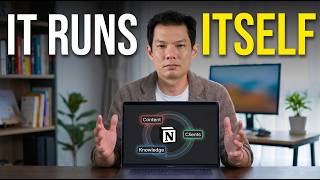
I Left Amazon and Built a $1M Business — Using Notion
Ex-Amazon PE built a $1M solo business on Notion.
Steve's pitch: the Notion-as-OS playbook he used to leave Big Tech and run a seven-figure one-person business — useful if you're eyeing the indie/solo path off the engineering ladder.
details
What it is: A sponsored case study from Steve (ex-Amazon Principal Engineer turned creator/coach) showing how he runs a $1M/year solo business using Notion + Notion Agent as his operating system.
How it works (likely structure based on description):
- Frames the leap: from Amazon PE comp to solo creator economics
- Notion as the single source of truth — content pipeline, coaching ops, book launch, course delivery
- Notion Agent demo: AI automating tasks across his workspace (drafting, summarizing, routing work)
- Heavy sponsor integration — the video doubles as a Notion Agent ad
- Cross-promo to his coaching, book, and promo prep services
Tools & links:
- Notion Agent — Notion's AI agent layer, the sponsor and the centerpiece tool
- Technical Behavioral Interview (book) — his #1 Amazon behavioral interview playbook
- 1:1 coaching for performance review + promo prep (linked in description)
The actual message to engineers:
- You don't need a team or VC to clear $1M — a tight Notion stack + AI agents + a niche audience can do it solo
- Big Tech IC ladder is one path; productizing your expertise (book, course, coaching) is another with better leverage now that AI compresses ops work
- Pick one tool and go deep — he treats Notion as his ERP, not just a notes app
What to prepare for if you want this path:
- A real audience/niche before you leave — he had Amazon PE credibility + a YouTube channel before jumping
- Comfort with sales/marketing, not just building — most of the work is content + funnels, not code
- Sponsor-driven content economics: this video itself is a revenue line
Why it matters for you: If you're an engineer weighing the solo/creator exit, this is the operational blueprint side of the conversation — less "should I leave" and more "here's the stack that runs the business after you do."
1 previously covered


Alex Ziskind
Mac Minis are sold out so Alex tested an OpenClaw cloud alt and a $500 MacBook Neo against Windows — TL;DR the budget Mac still wins for local AI per dollar.



Matt Wolfe
For your web apps: ChatGPT Images 2.0 pulling assets straight from URLs and Claude Design's prompt-to-visual pipeline are the only two things in this dump worth wiring into a build.
8 videos

This AI Actually Surprised Me
ChatGPT image model pulls assets straight from URLs.
Skip — real estate flyer demo, zero relevance to building web apps.
details
What it is: Matt shows ChatGPT's new image model generating a real estate flyer by ingesting a Zillow URL directly — pulling address, price, details, and images without any manual download.
How it works:
- Prompt: "Create a real estate listing flyer for this modern coastal home in San Diego" + raw Zillow URL
- Model fetches page content (text + images) on its own
- Outputs a finished flyer with accurate price ($5.3M), address, and listing photos
Tools & links:
- ChatGPT image model (unspecified version) — URL-aware image generation
- futuretools.io — Matt's AI tools directory
Why it matters for you: Marginal — the URL-as-input pattern is mildly interesting for app workflows that mash up external content, but the demo is real-estate flyer fluff with no API/dev hook. Skip unless you're building image-gen features that need to consume live web assets.



ChatGPT Images Just Got Way Better (Here's Why)
Demo reel of the upgraded ChatGPT image model.
Mostly skippable for a web app builder — only useful if you need quick marketing/UI mockup assets from ChatGPT.
details
What it is: A walkthrough of what the new ChatGPT Image model can do, with a grab-bag of prompt examples.
How it works:
- New image model is rolled into ChatGPT directly — no separate tool, just prompt it
- Better text rendering inside images (logos, UI mockups, memes actually readable)
- Stronger style consistency across multi-image generations
- Handles reference images / iterative edits more reliably than DALL·E 3
Tools & links:
- ChatGPT — image generation now native in the model
- futuretools.io — Matt's AI tool directory (channel plug)
Why it matters for you: Marginal. As a web app builder, the only practical hook is generating quick UI mockups, marketing imagery, or OG images without leaving ChatGPT — no API/integration angle in this video.

This "Dangerous" AI Model Just Got Hacked
Anthropic's Mythos model reportedly accessed by unauthorized users.
Skip — pure AI drama with zero takeaways for shipping web apps.
details
What it is: A news riff on Anthropic's "too dangerous to release" Mythos model getting accessed by unauthorized parties, plus Sam Altman snarking about it on the Core Memory podcast.
How it works:
- Anthropic marketed Mythos as too powerful/scary for public release
- Unauthorized users reportedly got hands on it anyway
- Anthropic claims no evidence of system impact (yet)
- Altman dunks: "clearly incredible marketing to say we built a bomb... we'll sell you a bomb shelter for $100 million"
Tools & links:
- None relevant — no tools, repos, or APIs mentioned
Why it matters for you: It doesn't. This is AI industry gossip with no implications for building web apps — no API changes, no new capabilities, no dev tooling.

ChatGPT Images 2.0 Is Actually Crazy
ChatGPT Images 2.0 beats Nano Banana on consistency.
If your web apps need on-brand image generation or in-app editing, this model just raised the floor for character consistency, legible text, and edit control.
details
What it is: A walkthrough of OpenAI's ChatGPT Images 2.0 update, framed as a head-to-head against Google's Nano Banana.
How it works:
- Stronger consistent-character generation across multiple prompts/scenes
- Cleaner in-image text rendering (fewer garbled letters, usable for UI mockups/marketing)
- Better editing primitives — targeted changes without nuking the rest of the image
- More control over composition and final output via prompt directives
Tools & links:
- ChatGPT — where Images 2.0 ships
- futuretools.io — Matt's tool directory
Why it matters for you: For web apps, this is the first OpenAI image model that's plausibly good enough to wire into a product flow (avatars, hero art, in-app edits) without the text-rendering and consistency hacks you needed before.

The Most Underrated Claude Feature Right Now
Claude Design turns prompts into polished visuals and animations.
If you build web apps, Claude Design can spit out landing pages, mockups, and UI layouts straight from the Claude website — skipping the After Effects detour.
details
What it is: Claude Design — a feature inside claude.ai that generates visuals (landing pages, mockups, slide decks, UI layouts, animations) from prompts.
How it works:
- Lives directly in the Claude web interface, no separate tool needed
- Prompt-driven: describe the visual and Claude renders it
- Handles animated outputs (e.g. map zooms with text overlays) that previously required After Effects
- Generates data viz like bar graphs from a description
- Can produce full slide presentations with cohesive design
Tools & links:
- Claude — where Claude Design lives
Why it matters for you: Fast path to landing pages, UI mockups, and marketing visuals for your web apps without leaving Claude or touching design software.

The Biggest GPT-5.5 Upgrade
GPT-5.5 launches with smarter context-aware prompting.
Skip — model release hype with no transcript and nothing actionable for shipping web apps.
details
What it is: Matt's reaction/overview of the GPT-5.5 release, focused on consumer ChatGPT improvements.
How it works:
- GPT-5.5 is pitched as smarter, faster, stronger at reasoning
- Headline feature per Matt: simple prompts work better because the model leans on stored context and user preferences
- Framed for "everyday users," not developers — no API, eval, or integration angle in the description
Tools & links:
- futuretools.io — Matt's AI tools directory
- futuretools.io/newsletter — weekly AI newsletter
Why it matters for you: Almost nothing here for a web app builder — no API pricing, latency, tool-use, or structured-output details. If GPT-5.5 lands in your stack you'll get more from the OpenAI changelog than from this video.
Verdict: Skip unless you specifically want Matt's vibe-check on the consumer ChatGPT UX.



My First Million
Skip 'follow your passion,' replace bad habits instead of quitting them, hunt opportunity where 20-somethings aren't looking, and remember Howard Marks: the best buys feel awful.
4 videos

GTA 6 Goldrush, TBPN's $100M OpenAI Deal, The OG Clickbait King Who Burned $4B/Year
Where smart 20-somethings should hunt for opportunity now.
Shaan's framework for spotting the current wave instead of chasing the last one — useful lens for any builder picking what to work on.
details
What it is: A grab-bag MFM episode anchored on the question: *if you're smart and in your 20s, where's the opportunity right now?* Plus segments on the GTA 6 economy, TBPN's $100M OpenAI deal, and an old-school clickbait operator who burned $4B/year.
The featured idea — Shaan's "don't surf the last wave" framework:
- Most people never explicitly ask *where is the opportunity right now?* — they default to copying what already worked
- Shaan's own cautionary tale: 2012–2018 he built social/messaging apps (a Bebo-style network, a Twitch plugin) — a decade after that wave had crested
- Social media's actual window was 2004–2012. Building Snapchat/WhatsApp clones in 2014 = dead on arrival because consumer social is winner-take-all with network-effect lock-in
- The waves he *should* have been on during that window:
- Crypto — Shaan was personally buying Bitcoin, even got an Indian news headline for putting 25% of net worth in BTC pre-wealth, but never connected it to *what to build*
- Machine learning / big data
- Mobile apps — his company had ONE iPhone engineer in 2012, four years after the iPhone shipped
- His metaphor: "the ocean was over there and we were going in circles in the lazy river like idiots"
How to apply it:
- Open your notepad and literally write down: *where is the opportunity right now?* before writing your to-do list
- Stop optimizing for what's *proven* — proven means the winners already escaped velocity
- Current waves Shaan implicitly flags: AI, and bio/peptides + AI
How they made money (the cautionary version): Shaan eventually exited (Bebo-era pivot led to acquisition, later Bookface/Twitch-era work, then Milk Road newsletter sold for 8-figures). The lesson he's selling: the exit happened when he *finally* stopped surfing old waves and rode crypto + newsletters at the right moment.
Tools & links:
- MFM Business Idea Database — HubSpot-sponsored idea list
- Shaan Puri on X
- Sam Parr on X
Why it matters for you: Direct application to picking what to build — the framework forces you to audit whether your current side project is on the rising wave (AI tooling, agents, bio×AI) or a nostalgia clone of 2015's winners.

How to find your thing
Why 'follow your passion' fails and what beats it.
Shaan and Sam reframe the career-direction problem with a more actionable framework than the usual 'passion' platitude — useful if you're questioning your lane.
details
What it is: Episode 818 — Shaan and Sam respond to a 24-year-old fan who's smart, hardworking, and stuck on which lane to pick. Shaan argues 'follow your passion' is terrible advice and offers a replacement framework.
The featured idea — Joseph Campbell's 'follow your bliss' (later 'follow your blisters'):
- Campbell is the guy who codified the hero's journey (the story shape behind Star Wars, Harry Potter, etc.)
- He arrived at it by being obsessed with indigenous myths and Native American stories as a kid — first as a consumer, then asking 'why do I love these so much, what's the structure?'
- That obsession-turned-investigation became his life's work
- Later refined to 'follow your blisters' — i.e., the thing you'll grind on long enough to get calluses, not just the thing that excites you on a Tuesday
Why 'passion' is the wrong frame:
- 90%+ of people don't actually know what their passion is — including Sam (36, by most measures successful, still doesn't know)
- Schools/parents give kids a fully structured path (classes, tests, grades), then graduation drops them into total unstructured open water
- Default fallback when you don't know: follow your familiar — do what your parents did, what your friends are doing, banking/consulting because it's the visible path
- Sitting in 'the fog of uncertainty' feels terrible, so people grab the nearest structured thing
What they actually did to make money / build careers (implied pattern from the framing):
- Both hosts sold companies before the podcast (Sam: The Hustle, sold to HubSpot; Shaan: multiple exits)
- Both describe themselves as perpetual reinventors, not single-passion lifers — reinforcing that the 'pick one thing for 50 years' archetype is rare and not required for outcomes
- Podcast itself (~1,000 episodes in) is HubSpot-produced — the sponsor/distribution stack is the business model
Tools & links:
- HubSpot $100M life system — the episode's sponsor plug
- Mark Manson's podcast on whether to follow your passion — Shaan cites it heavily (search 'Mark Manson follow your passion podcast')
- Joseph Campbell's hero's journey — foundational reference
Why it matters for you: Transcript cuts off mid-framework, but the takeaway for an engineer questioning their lane: stop hunting for a 'passion' lightning bolt, look for the thing you'll endure the blisters for — the topic you over-research for free. That's the signal.

Quitting a Bad Habit Never Works
Replace bad habits, don't try to quit them.
A short neuroscience-backed framework for swapping habits — useful, but zero business or money-making content for this channel's focus.
details
What it is: A brief clip on the science of habit change — why willpower-based quitting fails and what to do instead.
The habit loop (3 components):
- Cue — the trigger that kicks off automatic behavior
- Routine — the action itself (grabbing a beer, going for a run)
- Reward — what your brain gets out of it
- At the core: a craving that glues the loop together
The key research:
- Dr. Ann Graybiel at MIT studies habit formation
- Trained rats to run a maze, removed them for years, dropped them back in — the habit fired instantly
- Takeaway: neural pathways for habits don't get erased, they stay dormant
Why quitting fails:
- Saying "I'm going to stop drinking" doesn't extinguish the pathway
- The craving and cue are still wired in, waiting to fire
The fix — overwrite, don't erase:
- Keep the same cue
- Swap in a new routine
- Make sure the new routine delivers a similar reward
- This overwrites the existing neural pathway instead of fighting it
Featured individual/business: None — this is a standalone clip on behavioral science, no founder profile, no business breakdown, no money-making playbook.
Tools & links: None mentioned in the transcript.
Why it matters for you: This is off-pattern for MFM — no business, no founder, no revenue mechanics. Skippable given your focus on featured individuals/businesses and how they make money.

Why the Best Trades Always Feel Wrong | Howard Marks
Howard Marks on why great buys feel terrible.
A 60-second masterclass in contrarian investing — but there's no business breakdown or money-making playbook here.
details
What it is: A short clip of legendary investor Howard Marks (co-founder of Oaktree Capital) explaining why the best buying opportunities feel psychologically awful.
The featured individual:
- Howard Marks — co-founder of Oaktree Capital Management, one of the world's largest distressed-debt investors (~$200B AUM). Famous for his memos to clients and books like *The Most Important Thing*.
The core idea (what he actually said):
- Quote anchor: *"When the time comes to buy, you won't want to."*
- The lowest prices happen at the point of lowest consensus — maximum fear, pessimism, uncertainty.
- Causes of those moments: bad macro news, faltering corporate earnings, falling stock prices, widespread losses, doom-laden media coverage.
- The catch: to buy at the bottom, you also have to feel all that fear and pessimism — not be immune to it.
- *"If you zig when they zig, you're not going to outperform."*
- *"The battlefield hero is not somebody who's unafraid. It's somebody who does it anyway."*
How he made his money (context, not in transcript):
- Built Oaktree on distressed debt — buying bonds of troubled companies when nobody else would.
- Sold majority stake to Brookfield in 2019 (~$4.7B deal).
- Decades of contrarian, value-driven credit investing.
Tools & links:
- No tools, repos, or resources mentioned in the clip.
Why it matters for you: This is a philosophy snippet, not the detailed business/money-making breakdown your reader focus wants — there's no company teardown or revenue playbook here, just a mental model for buying when it feels wrong.


What Shipped

claude-code
Three releases: OAuth fix, memory leaks squashed, new MCP/plugin power-ups.
Massive quality-of-life batch for daily Claude Code users — memory leaks fixed, `/resume` learns PR URLs, and `alwaysLoad` lets you pin critical MCP tools past tool-search deferral.
details
What changed:
- v2.1.123 — Fixed OAuth 401 retry loop when `CLAUDE_CODE_DISABLE_EXPERIMENTAL_BETAS=1` is set
- v2.1.122 — `/resume` now finds sessions by pasting a PR URL (GitHub, GHE, GitLab, Bitbucket); `/mcp` flags duplicate claude.ai connectors; OpenTelemetry adds `claude_code.at_mention` log event; bash mode no longer terminates on `!exit`/`!quit`; `/branch` no longer produces broken forks from rewound timelines; image resize bug fixed (was 2576px, now correct 2000px max)
- v2.1.121 — New `alwaysLoad: true` MCP option skips tool-search deferral so critical tools stay loaded; `claude plugin prune` removes orphaned plugin deps; type-to-filter search added to `/skills`; PostToolUse hooks can now `updatedToolOutput` for *all* tools (not just MCP); fullscreen mode no longer scroll-jumps when typing; dialogs that overflow the terminal are now scrollable; `--dangerously-skip-permissions` no longer prompts for `.claude/skills/`, `.claude/agents/`, `.claude/commands/` writes; `/terminal-setup` enables iTerm2 clipboard access so `/copy` works through tmux; MCP servers auto-retry up to 3x on transient startup errors; LSP diagnostic summaries now expand on click/ctrl+o
- Memory fixes (v2.1.121): Unbounded multi-GB RSS growth on image-heavy sessions, ~2GB leak in `/usage` on big transcript histories, leaks from long-running tools without progress events
- Resume hardening: `--resume` no longer crashes on startup in external builds, no longer fails on corrupted transcript lines (skipped instead)
- Bash tool: No longer becomes permanently unusable when the start directory is deleted/moved mid-session
Breaking changes:
- None — all backward-compatible bug fixes and additive features
Links:
Why it matters for you: As a daily user, three things to do today: (1) add `alwaysLoad: true` to MCP servers whose tools you reach for constantly so they bypass tool-search; (2) try pasting a PR URL into `/resume` to jump back to the session that wrote it; (3) if you've noticed Claude Code eating RAM on long sessions, upgrade — multiple memory leaks are now patched.
Anthropic
New Labs product for visual design, plus creative-work positioning push.
Claude Design adds a polished visual-output surface (slides, prototypes, one-pagers) — useful when you need design artifacts alongside code without leaving the Claude ecosystem.
details
What changed:
- Claude Design (Apr 17, 2026) — New Anthropic Labs product to collaborate with Claude on designs, prototypes, slides, and one-pagers
- Claude for Creative Work (Apr 28, 2026) — Announcement positioning Claude for creative workflows
- ANZ expansion (Apr 27, 2026) — Theo Hourmouzis named GM of Australia & New Zealand; Sydney office opens
Breaking changes:
- None — all new product launches and announcements
Links:
Why it matters for you: Claude Design is the one to watch — if you build apps, having an in-ecosystem tool for prototypes and one-pagers means less context-switching to Figma/Canva when you need a quick visual artifact for a feature pitch or landing page.
Supabase
Quarterly ranking of fastest-growing open-source orgs.
Open-source signal radar — useful for spotting fast-rising libraries and orgs before they hit mainstream awareness.
details
What changed:
- Supabase launched the OSSCAR Index, a quarterly ranking of the fastest-growing open source organizations
- The site, underlying data, and scoring code are all open source
Breaking changes:
- None — new content/data product, no API or product changes
Links:
Why it matters for you: A free, data-backed way to discover trending OSS projects each quarter — handy for sourcing dependencies or scouting tools before everyone else adopts them.
Claude Code
Weekly digest covering Apr 20–24 Claude Code changes.
The official weekly recap is the fastest way to catch what shipped without scanning every release tag — directly aligned with daily use.
details
What changed:
- Anthropic published the Week 17 (Apr 20–24, 2026) edition of the Claude Code What's New digest
- Only the post title was scraped — no body content was captured by the source feed, so feature details, GIFs, and embedded examples are not available in this scrape
- Based on the surrounding v2.1.121–v2.1.123 GitHub releases (which fall in this window), highlights from this period include: `alwaysLoad` MCP option, `/resume` PR-URL search, `claude plugin prune`, scrollable overflow dialogs, multiple memory leak fixes, and image-resize correction
Breaking changes:
- None reported in the scraped title; consult the linked digest for the canonical list
Links:
Why it matters for you: Open the Week 17 digest directly — it's the canonical place for embedded GIFs/videos and usage examples that the scraper couldn't pull. Pair it with the v2.1.121–123 release notes above for the full set of changes that landed in your daily workflow this week.
What's Buzzing

@claudeai
1h ago