Morning Brief
2026-04-22 · 18 sources
Today's feed says quit chasing shiny AI demos and go build boring, productized cash machines — while the tinkerers quietly prove you can run Kimi K2 on your desk.
What Creators Are Saying

Nate Herk | AI Automation
Two build-alongs worth stealing: 10 concrete GPT Image 2 workflows and a Claude-driven 3D website generator — grab the prompts and repos, skip the fluff.
2 videos

OpenAI Image 2 is Nuts. Here are 10 Ways to Use it.
10 practical uses for OpenAI's GPT Image 2 model.
If you're wiring image generation into automations, this is a rapid-fire tour of what the new model actually unlocks — with Nate's usual workflow-first framing.
details
What it is: A walkthrough of 10 practical applications for OpenAI's GPT Image 2 (the successor to gpt-image-1), framed around real automation use cases rather than generic demos.
How it works:
- No transcript available, so specifics on each of the 10 use cases aren't extractable from metadata alone
- Based on Nate's channel pattern, expect n8n/Make workflows wrapping the OpenAI image API
- Likely covers: product mockups, ad creative variants, thumbnail generation, social graphics, character consistency, style transfer, branded asset generation, batch workflows, and API-driven pipelines
- Model upgrade context: GPT Image 2 improves text rendering, instruction following, and character/object consistency vs. Image 1 — key unlocks for production automations
Tools & links (from description):
- AI Automation Society Plus — Nate's paid community with full courses
- AI Automation Society (free) — free resources tier
- YT Podcast application — apply to be on Nate's podcast
- Uppit AI — Nate's agency for done-for-you automation work
- Full tool stack is in the description's "My Tools" section (truncated in snippet) — typically includes n8n, OpenAI API, and Skool
Caveat: Without the transcript, the specific 10 use cases and any code/JSON workflow exports aren't visible here. Worth watching directly if you want the actual build patterns.
Why it matters for you: Nate's instructive format usually hands you copy-pasteable workflow JSON — if GPT Image 2's consistency gains hold up, this is the video to mine for drop-in image-gen nodes in your own automations.

Claude Design Builds Beautiful 3D Websites Instantly (full tutorial)
Using Claude to generate 3D websites from prompts.
Nate walks through Claude's design capabilities for spinning up 3D-heavy sites fast — practical if you want to skip the Figma-to-code grind.
details
What it is: A tutorial on using Claude (via the Skool community's "Claude Design" workflow) to build visually rich 3D websites from natural-language prompts.
How it works:
- Nate demonstrates prompting Claude to scaffold a full site with 3D elements (likely Three.js / React Three Fiber under the hood)
- Walks through iterating on the design via follow-up prompts rather than hand-coding
- Covers deployment/export of the generated site
- Transcript not available — specific prompt patterns, libraries, and deploy targets are inside the video
Tools & links:
- AI Automation Society Plus (paid) — Nate's paid community with full courses + support
- AI Automation Society (free) — free resources
- YT Podcast apply
- Work with Nate (Uppi) — agency/consulting
- Claude (Anthropic) — the model doing the generation
Why it matters for you: If you're evaluating LLM-driven frontend scaffolding, this is a concrete demo of Claude's design chops beyond plain React — worth a skim to see where the prompt-to-site workflow actually breaks down vs. delivers.
6 previously covered





Cole Medin
Nothing new.


Chris Koerner on The Koerner Office Podcast
Productized services are the solo operator's cheat code — one narrow offer, fixed price, repeatable delivery beats bespoke consulting every time.
1 videos
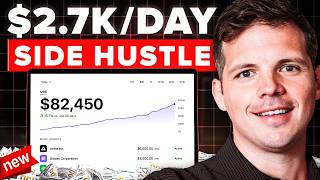
The Most Profitable Solo Business You've Never Heard Of
Productized services as a solo cash machine.
If you want a side hustle with recurring revenue and no employees, productized services are the lowest-friction on-ramp Chris pitches.
details
What it is: A deep dive on productized services — turning a freelance skill (design, copy, dev, etc.) into a fixed-scope, fixed-price, subscription offer run solo.
How it works:
- Pick one repeatable deliverable (logos, landing pages, blog posts, video edits)
- Package as a flat monthly fee with a defined SLA (e.g. "unlimited requests, one at a time, 48hr turnaround")
- Sell via a simple one-page site with Stripe checkout — no sales calls
- Queue work in a Trello/Notion board clients can see
- Stay solo or sub out overflow to contractors once MRR is stable
Canonical examples referenced in this space:
- Design Pickle — unlimited graphic design subscription
- DesignJoy (Brett Williams) — solo designer hitting ~$1.5M ARR alone
- ContentFly / similar copy subscriptions
Why it beats a normal agency:
- No scoping, no proposals, no hourly billing
- Recurring revenue instead of project-by-project churn
- One person can run it — margins stay high
- Easy to niche down (e.g. "landing pages for SaaS" vs generic design)
Tools & links:
- Stripe — subscription billing
- Framer / Carrd — fast one-page marketing sites
- Trello or Notion — client-visible request queue
- DesignJoy — reference solo productized service site
- Koerner Office Podcast — full episode
Why it matters for you: As a software engineer, you already have a deliverable most people will pay monthly for — pick a narrow dev/design subscription (bug fixes, landing pages, Shopify tweaks, internal tool builds), slap a flat price on it, and you've got a side hustle you can run nights and weekends without ever hopping on a sales call.


Codie Sanchez
Skip the startup lottery and buy a boring cash-flowing business — boring wins because the competition is asleep and the multiples are cheap.
1 videos

Most founders make less than $46K. Most startups don't profit for 3-5 years.
Buy boring businesses instead of chasing startup dreams.
If you're eyeing a side hustle, Codie argues buying an existing cash-flowing business beats the 3-5 year startup grind with sub-$46K founder pay.
details
What it is: A contrarian pitch against the startup myth — most founders earn less than $46K and most startups don't turn a profit for 3-5 years, so acquiring an existing small business is the smarter play for income.
How it works:
- Startup reality check: median founder pay is under $46K, and profitability typically takes 3-5 years of runway
- The alternative: buy a boring, already-profitable local business (laundromats, HVAC, landscaping, etc.) with existing cash flow on day one
- Acquisition path beats the zero-to-one grind because you skip product-market fit risk and inherit customers, revenue, and systems
- Typical playbook leans on SBA loans, seller financing, and owner-operator transitions from retiring boomers
Tools & links:
- No transcript available — specific tools/links not captured in this video's metadata
- Codie's broader ecosystem: Contrarian Thinking — newsletter and acquisition frameworks
Why it matters for you: If the goal is real side-hustle income (not equity lottery tickets), Codie's core thesis — cash flow > hype — reframes what a "good" side business looks like: acquire, don't invent.




Alex Ziskind
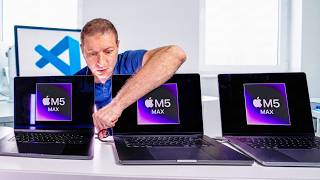
Alex is running Kimi K2 locally on an NVFP4-capable Nvidia rig — way more raw power than a Mac mini, but also way pricier once you factor in the GPU stack.
1 videos

Top FREE model… one format made it WAY FASTER
Running Kimi K2 locally with NVFP4 vs 8-bit quantization.
Skip the quantization theory — the useful bit is which hardware actually runs Kimi K2 locally and how it stacks up against a Mac mini for AI workloads.
details
What it is: Alex benchmarks Kimi K2 (a top free open-weight model) at different quantizations — specifically NVFP4 (4-bit) vs 8-bit — to see if the smaller format is actually faster without tanking quality.
How it works:
- Tests run on an M3 Max Mac (based on tags) plus likely a CUDA/NVIDIA rig for NVFP4 support
- NVFP4 is an NVIDIA 4-bit floating-point format that needs Blackwell-class GPUs (RTX 50-series / B200) for native acceleration
- Compares tokens/sec and output quality between 4-bit and 8-bit variants
- Kimi K2 is Moonshot AI's 1T-param MoE model, so even quantized it needs serious VRAM or unified memory
Hardware angle (your focus):
- M3 Max with 64GB+ unified memory can run quantized K2 but will be memory-bound
- NVFP4 path implies a Blackwell GPU (RTX 5090 ~$2k, or a DGX Spark / B200 workstation — $4k+ to $30k+)
- Mac mini M4 Pro (64GB, ~$2k) is the budget comparison point — competitive for 8-bit but can't do NVFP4
- Mac Studio M3 Ultra (192GB+, $4k–$10k) is the Mac answer for models this size
Tools & links:
- Kimi — Moonshot's hosted K2 chat, free tier
- Kimi K2 weights on Hugging Face (Moonshot AI org)
- NVFP4 format — NVIDIA's 4-bit FP spec, needs Blackwell
Why it matters for you: If you're weighing a Mac mini vs other kit for local AI, this video tells you whether the NVFP4 speedup is worth buying NVIDIA over Apple Silicon for top-tier open models — the core "which machine, how much" question you actually want answered.
1 previously covered

Matt Wolfe
Canva's AI 2.0 auto-generates full design campaigns — interesting for marketing pages, but not the web-app building block you're looking for.
1 videos

Canva AI 2.0 Features Announced (MAJOR Upgrades!)
Canva's AI 2.0 pitch for auto-generated design campaigns.
Skip — Canva marketing recap with zero relevance to building web apps.
details
What it is: A walkthrough of Canva's AI 2.0 announcement — style learning, prompt-to-campaign generation, Notion brief integration.
How it works:
- Style Learning: Canva ingests your brand/YouTube assets and mimics the look
- Prompt-to-campaign: link a Notion doc, get a full social media set generated
- Positioned as an end-to-end replacement for starting designs from scratch
Tools & links:
- Canva — design tool announcing AI 2.0
- futuretools.io — Matt's AI tool directory (channel promo)
Why it matters for you: It doesn't. This is a design-tool product announcement with no API, SDK, or engineering angle — nothing to wire into your web apps.
8 previously covered




My First Million
Elder care is a massively underbuilt market — aging demographics plus fragmented mom-and-pop operators equals a real opportunity for anyone willing to run unsexy ops.
1 videos

Building for Elder Care Is the Biggest Opportunity
Elder care is a massive, underbuilt business opportunity.
Transcript unavailable — thesis is a demographic goldmine pitch, but without specifics it's low-signal for a software engineer hunting concrete plays.
details
What it is: A My First Million episode arguing elder care is the biggest untapped market opportunity right now. Shaan Puri and Sam Parr riff on the aging-population wave and business ideas built around it.
The thesis (inferred from title/framing):
- Baby boomers aging = enormous, forced demand
- Fragmented, offline, underbuilt industry — ripe for software, services, and brand plays
- MFM's usual angle: pick a niche, build cashflow, ride the demographic wave
Featured individual/business: None identifiable from metadata — no guest tagged, description is boilerplate HubSpot ad copy. This appears to be a Shaan + Sam discussion episode, not a founder interview.
How they likely made money (MFM host pattern):
- Shaan Puri: sold Bebo to Amazon, runs AllDayPodcast network, angel investing
- Sam Parr: sold The Hustle newsletter to HubSpot (~$27M), now doing Hampton (paid founder community at joinhampton.com)
- Neither has a public elder-care business — this is opportunity-spotting, not a case study
Tools & links:
- HubSpot CRM — sponsor plug, free CRM
- My First Million podcast — channel subscribe link
Caveat: Transcript was not available in the scrape. Specific business ideas, dollar figures, and named companies discussed in the episode are not captured here. Engagement (6.2k views, 146 likes, 3 comments in ~24h) is modest for MFM — suggests a brainstorm-style episode rather than a breakout.
Why it matters for you: Without the transcript there's no detailed playbook to extract. If the elder-care thesis interests you, watch directly — otherwise skip; no featured founder, no concrete numbers, no software-specific angle surfaced in the metadata.


What Shipped

claude-code
Faster native search, smarter /model, /resume summarizes stale sessions.
Daily-driver quality-of-life: faster Glob/Grep on macOS, persistent /model picks, and /resume no longer chokes on large sessions.
details
What changed:
- Native macOS/Linux builds replace `Glob` and `Grep` with embedded `bfs` and `ugrep` via Bash — faster searches, no extra tool round-trip (npm/Windows builds unchanged)
- `/model` selections now persist across restarts even when the project pins a different model; startup header shows when the active model is pinned by project/managed settings
- `/resume` now offers to summarize stale, large sessions before re-reading them (matching `--resume`)
- Default effort bumped to `high` (from `medium`) for Pro/Max subscribers on Opus 4.6 and Sonnet 4.6
- Faster startup when both local and claude.ai MCP servers are configured (concurrent connect by default)
- Agent frontmatter `mcpServers` now load for main-thread agent sessions via `--agent`
- Forked subagents gated behind `CLAUDE_CODE_FORK_SUBAGENT=1` for external builds
- `plugin install` on an already-installed plugin now installs missing dependencies instead of stopping; `claude plugin marketplace add` auto-resolves missing deps
- Managed-settings `blockedMarketplaces` and `strictKnownMarketplaces` now enforced on install, update, refresh, and autoupdate
- Advisor Tool (experimental): dialog labeled, learn-more link added, startup notification; fixed sessions stuck with "Advisor tool result content could not be processed" on every prompt and `/compact`
- `cleanupPeriodDays` retention sweep now also covers `~/.claude/tasks/`, `~/.claude/shell-snapshots/`, `~/.claude/backups/`
- OpenTelemetry: `user_prompt` events include `command_name`/`command_source`; `cost.usage`, `token.usage`, `api_request`, `api_error` include `effort` when supported. Custom/MCP command names redacted unless `OTEL_LOG_TOOL_DETAILS=1`
- Fixes: Plain-CLI OAuth 401 refresh mid-session; `WebFetch` hang on huge HTML; HTTP 204 proxy crash; `/login` no-op with expired `CLAUDE_CODE_OAUTH_TOKEN`; `Ctrl+_` undo glitches; `NO_PROXY` ignored under Bun; spurious escape/return from coalesced key events
Breaking changes:
- Native macOS/Linux: `Glob` and `Grep` are no longer standalone tools — they run through Bash via `bfs`/`ugrep`. Workflows or hooks that assert on specific tool names may need updating (npm installs keep the old behavior).
- Pro/Max default effort on Opus 4.6 / Sonnet 4.6 raised to `high` — expect higher token usage unless you override.
Links:
Why it matters for you: As a daily Claude Code user, the native `bfs`/`ugrep` swap and persistent `/model` picks directly speed up your loop — and `/resume` summarization means long sessions stop being dead weight.
What's Buzzing


@sama
11h ago