Morning Brief
2026-04-17 · 18 sources
Opus 4.7 gets put to work running trades and Claude Code routines while the creator economy hands you vertical stacking, habit loops, and a 1M-sub editing playbook.
What Creators Are Saying

Nate Herk | AI Automation
Nate throws Opus 4.7 at autonomous stock trading via Claude Code routines and stress-tests whether 4.7 is a real jump or just rebadged 4.6 — worth a look for the routine pattern alone.
2 videos

I Turned Claude Opus 4.7 Into a 24/7 Trader
Claude Code routines + Opus 4.7 as autonomous stock trader.
Step-by-step build of a scheduled agentic trading system using Claude Code's new routines feature — directly replicable stack with API wiring you can copy.
details
What it is: A 24/7 AI trading agent built in Claude Code using Opus 4.7 + the new routines (scheduler) feature, trading via Alpaca paper account with a goal of beating the S&P.
Background context:
- Prior video: Nate ran Opus 4.6 in an OpenClaw agent for 30 days, beat S&P by ~8% on a $10K paper account.
- Opus 4.7 shows ~4% jump on Agentic Financial Analysis benchmark vs 4.6 — motivation for upgrade.
- This build ditches OpenClaw/Hermes entirely — pure Claude Code.
How it works:
- Scheduler: Claude Code *routines* fire on cron-like triggers — pre-market, market open, midday, close.
- Model: Opus 4.7 (pitched as built for "full throttle agentic work, judgment over ambiguity, self-verifying outputs").
- Skills: Custom skills built as-needed — research, decision-making, trade placement, logging.
- Research: Perplexity API (web_fetch/web_search would also work).
- Execution: Alpaca API endpoints (not MCP) to place trades on paper account.
- Journaling: Agent writes context to files between runs so it "learns" across sessions.
- Reporting: End-of-day summary pushed to ClickUp daily.
Setup steps covered:
- Alpaca: sign up → Trading API → paper account ($100K default) → regenerate API keys, save both key AND secret (secret only shown once).
- ClickUp: webhook/API for notifications (interchangeable with Slack/Telegram/WhatsApp).
- Perplexity: API key for research calls.
Tools & links:
- Alpaca — brokerage API, free paper trading with $100K, also has MCP server option
- Perplexity API — research layer
- ClickUp — notification destination
- Skool — AI Automation Society Plus — paid community
- Skool — AI Automation Society (free) — free resources
- Uppit AI — Nate's agency
- Claude Code routines — covered in a separate Nate video (linked in-video)
Why it matters for you: Concrete recipe for wiring Claude Code routines + Opus 4.7 into a long-running agentic workflow with external APIs (Alpaca/Perplexity/ClickUp) — the pattern generalizes far beyond trading to any scheduled autonomous agent you want to stand up.

Claude Opus 4.7 Just Dropped... Or Did It Really?
Is Opus 4.7 real, or just nerfed 4.6?
If you're paying $200/mo for Claude Max and burning tokens fast, Nate unpacks what Anthropic actually changed under the hood — and whether 4.7 is a real upgrade or marketing theater.
details
What it is: A skeptical breakdown of the Opus 4.7 release — investigating whether it's a genuine model upgrade or Anthropic quietly nerfing 4.6 to make 4.7 feel better by comparison.
Act 1 — What happened to Opus 4.6:
- AMD senior director analyzed ~7,000 Claude Code sessions
- Thinking depth collapsed 73% (2,200 → 600 characters of reasoning)
- Model stopped reading files before editing — failure rate jumped from ~6% to 33.7%
- Users had to interrupt the model 12x more often to prevent it going off the rails
- Reports of hallucinated git commit hashes, fake package names, fabricated API versions
- Word "simplest" appeared ~3x more often in output (optimizing for least effort)
- Premature task abandonment — model stops mid-task
- Power users burning through $200/mo Max plans in an hour
What Anthropic actually changed (not the model weights):
- Feb 9: Adaptive thinking introduced — model dynamically decides thinking budget per turn, sometimes allocating zero reasoning tokens
- Boris Cherny (Claude Code creator) confirmed: turns with zero reasoning = fabricated outputs; turns with deep reasoning = correct
- Silently dropped effort default to medium — weights/training unchanged, just runtime parameters dialed down
- As of April 15, Pro and Max users were still defaulting to medium effort
- In the new Claude desktop app: Opus 4.7 doesn't expose the effort slider (low/medium/high/max) that Sonnet and 4.6 had
The core claim: Opus 4.6 didn't get dumber — Anthropic turned off its thinking and reduced effort without telling anyone, then launched 4.7 addressing exactly those complaints.
Tools & links (from description):
- AI Automation Society Plus (paid) — Nate's course/community
- AI Automation Society (free) — free resources
- Nate's YT Podcast application
- Uppit AI — Nate's agency
Why it matters for you: Less a tutorial and more a heads-up — if you're relying on Claude Code for serious engineering work, check your effort/thinking settings explicitly rather than trusting defaults, and treat model version bumps with skepticism when the underlying weights may not have changed.
6 previously covered




NetworkChuck
Nothing new.
1 previously covered


Cole Medin
Nothing new.


Chris Koerner on The Koerner Office Podcast
Nothing new.




Codie Sanchez
Codie's pitch: stop selling one service and vertically integrate a single gig into a stack of revenue lines — the side-hustle unlock is owning more of the customer's workflow.
1 videos

Own the System, Not the Job
Vertical integration turns one gig into stacked revenue.
A side hustle stops being a job the moment you own the layer above and below it — this is the playbook in 90 seconds.
details
What it is: A mini-case on Taylor Sheridan (Yellowstone creator) using vertical integration to stack income streams on top of a single creative product.
The Sheridan stack:
- Writes the show (script revenue)
- Owns the filming locations — Four Sixes Ranch & Bosque Ranch (reportedly ~$50K/week to Paramount just for property access)
- Owns the livestock used on set — $25/cow, $2,000/horse per appearance
- Runs "Cowboy Camp" — reportedly $214K to train actors to ride/rope
- Result: Paramount pays him coming and going on every episode
The pattern (vertical integration):
- Don't just sell the output — own the inputs and the venue
- Each layer you own converts a cost center into a revenue line
- Studios/customers keep paying the same person at every step of the chain
How a side hustler copies it:
- Rent a commercial unit → buy the building → sublease to other tenants
- Rent a chair in a salon → buy the salon → rent chairs to other stylists
- Use a product in your service → white-label it → sell it to customers and competitors
- Freelance with a tool → build the tool → license it to other freelancers
Tools & links:
- Four Sixes Ranch — Sheridan's Texas ranch, filming location for 1883/Yellowstone
- Bosque Ranch — Sheridan's Weatherford, TX production property
Why it matters for you: The side-hustle trap is trading time for cash on someone else's platform; the escape is owning the next link in the chain so the same customer pays you twice (or five times) for the same transaction.


A Life Engineered
Nothing new.


Alex Ziskind
Nothing new.


Matt Wolfe
Matt breaks down his minimal-effort editing pipeline for 1M-sub videos and a quick take on AI video monetization — skip the hustle bit, steal the pipeline for your app's marketing videos.
2 videos

SUPER Easy YouTube Editing Tutorial
How Matt edits 1M-sub videos with minimal work.
Skip — this is a YouTuber workflow tutorial with zero relevance to building web apps.
details
What it is: Matt's personal video editing workflow for his AI news channel.
How it works:
- Live editing via Stream Deck — switches camera/screen in real-time while recording
- Records 1-2 hour raw, trims to 20-30 min finals
- Recut auto-removes silence gaps in one click (65min → 27min demo)
- DaVinci Resolve + Greg's Presets (paid) for zoom effects via Fusion overlay green box
Tools & links:
- Recut — auto silence removal
- DaVinci Resolve — free video editor
- Greg's Presets — paid DaVinci preset pack
- Stream Deck — hardware for live scene switching
Why it matters for you: It doesn't. This is content creator ops, not web dev. Skip.

Can You Monetize AI Videos?
Short answer on AI video monetization hustle.
Skip it — it's a 90-second AMA clip about faceless YouTube grift, not app-building.
details
What it is: A sub-2-minute AMA snippet where Matt dismisses the "make AI shorts, get rich" pitch. Says ~1% actually make money; winners still need storytelling, visual polish, and heavy iteration.
How it works:
- Viewer asks if an app that auto-generates and posts AI shorts is viable
- Matt: technically possible, not a great idea
- Breakout AI channels (Fruit Love Island, Italian brainrot) involve real story/process work
- Lower effort than filming, but still demands model testing and optimization
Tools & links (name-dropped, no URLs given):
- Veo 3.1 — Google's video gen model
- Kling 3.0 — Chinese video gen model
- Opus Clip — long-form → shorts clipper
- n8n — workflow automation to stitch + publish
- Cursor / Claude Code — to script the pipeline
Why it matters for you: Nothing here for web app builders. No architecture, no SaaS angle, no dev workflow insight — just a creator economy take. Auto-skip future Matt Wolfe AMA shorts.
8 previously covered





My First Million
Charles Duhigg on cue-routine-reward: the practical play is auditing your product's onboarding for the cue that locks in the routine, because that's what turns users into revenue.
1 videos
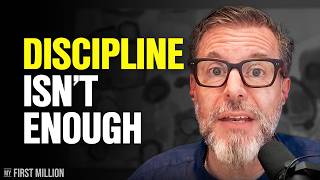
#1 Habit Expert: Why Your To Do List Is Making You Less Productive
Charles Duhigg on rewiring habits via cue-routine-reward loops.
Habit-hacking frameworks from the guy who coined 'keystone habit' — useful mental models for building dev routines that actually stick.
details
Featured guest: Charles Duhigg — journalist and author of *The Power of Habit*, which has sold millions of copies and reshaped pop psychology around behavior change. Sam Parr credits the book with helping him kick a 20-beer-a-day drinking habit.
The core framework — the Habit Loop:
- Cue → trigger for the automatic behavior
- Routine → the behavior itself
- Reward → what your brain gets out of it
- ~40-45% of daily actions are habits running on autopilot
- Neural pathways thicken over repetition, which is why white-knuckling willpower fails
Key insight — don't extinguish, replace:
- Dr. Ann Graybiel (MIT) research: habits persist in rats' brains for years even after removal from the trigger environment
- You can't delete a habit, only overwrite the routine while keeping the cue and reward
- Sam's example: craved sugar after quitting alcohol → ate M&M's instead of beer → then swapped M&M's for non-alcoholic beer
Keystone Habits (term Duhigg coined):
- Borrowed from his biologist wife's concept of 'keystone species'
- One small habit that cascades into broader behavior change
- Sam's weight-loss keystone: slept in workout clothes with shoes next to bed — feet hit floor, go into shoes, out the door
- Writer David Epstein uses the same trick
- The cue removes friction; execution becomes autopilot
How Duhigg makes money:
- Book royalties (*The Power of Habit*, *Smarter Faster Better*, *Supercommunicators*)
- Speaking engagements
- Journalism (Pulitzer winner, New Yorker staff writer)
Tools & links:
- Charles Duhigg on X
- Sam Parr on X
- HubSpot sponsor link: clickhubspot.com/jj20
Why it matters for you: If you're engineering-brained, the habit loop is essentially a state machine for behavior — identify the trigger, swap the function body, keep the return value. Useful for installing focus rituals, exercise, or killing doomscroll loops.




What Shipped

claude-code
Opus 4.7 xhigh, /ultrareview, auto-mode fixes.
Opus 4.7 with a new xhigh effort tier and /ultrareview cloud code review directly upgrade your daily Claude Code workflow.
details
What changed:
- Opus 4.7 xhigh effort level lands between `high` and `max` — tune via `/effort`, `--effort`, or model picker
- `/effort` now opens an interactive slider when called bare (arrow keys + Enter)
- Auto mode available for Max subscribers on Opus 4.7, no longer needs `--enable-auto-mode`
- `/ultrareview` — cloud-based parallel multi-agent code review; bare for current branch or `/ultrareview <PR#>`
- `/less-permission-prompts` skill scans transcripts and proposes allowlist for `.claude/settings.json`
- Auto (match terminal) theme follows terminal dark/light mode
- Read-only bash with glob patterns (`ls *.ts`) and `cd <project-dir> &&` commands skip permission prompts
- Plan files named after your prompt (e.g. `fix-auth-race-snug-otter.md`) instead of random words
- `/skills` menu sorts by token count with `t`
- `Ctrl+U` now clears full input buffer; `Ctrl+Y` restores
- Windows PowerShell tool rolling out (`CLAUDE_CODE_USE_POWERSHELL_TOOL`)
- Typo suggestions for `claude <cmd>` near-misses
- Fixed terminal display tearing and "Opus 4.7 temporarily unavailable" in auto mode
Breaking changes:
- `Ctrl+U` behavior changed (was: delete to line start, now: clear buffer) — use `Ctrl+Y` to restore old paste
- Reverted v2.1.110's non-streaming fallback retry cap (may affect anyone relying on shorter failure timeouts)
Links:
Why it matters for you: Daily Claude Code users get a smarter default model (Opus 4.7 xhigh), a real code review command (`/ultrareview`), and fewer permission interruptions on read-only commands — all compounding into noticeably less friction per session.
Anthropic
Opus 4.7 launches with stronger coding and agents.
This is the model powering your Claude Code sessions — stronger multi-step and coding performance directly translates to better daily results.
details
What changed:
- Claude Opus 4.7 released as the latest flagship Opus model
- Improved coding performance
- Stronger agent and multi-step task execution
- Better vision capabilities
- Emphasis on thoroughness and consistency on high-stakes work
Breaking changes:
- None announced — it's a new model release, existing pins continue to work
Links:
Why it matters for you: Opus 4.7 is the engine behind your Claude Code workflow — pair it with the new `xhigh` effort tier and `/ultrareview` from v2.1.111 to get meaningfully better output on complex, multi-file changes.
What's Buzzing


@sama
1d ago