Morning Brief
2026-04-10 · 16 sources
Harness engineering is the new meta — everyone from Cole Medin to Anthropic is racing to make AI coding agents deterministic, repeatable, and cheap enough to actually ship with.
What Creators Are Saying

Nate Herk | AI Automation
Nine videos in a week — Nate's sprint covers the adviser strategy for slashing Opus costs, Karpathy's Obsidian knowledge bases, running Claude Code free via Ollama/OpenRouter, and a $10K AI stock trading challenge that's equal parts entertaining and reckless.
9 videos
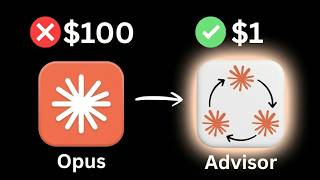
Claude Just Told Us to Stop Using Their Best Model
Anthropic's adviser strategy: Opus brains, Haiku prices.
Watch this if you want to cut your Claude API costs by 12%+ while keeping near-Opus intelligence in your agents.
details
What it is: Anthropic's official "adviser strategy" — pair Opus as a thinking advisor with Sonnet or Haiku as the executor. The executor only escalates to Opus when it actually needs the horsepower.
How it works:
- Executor (Sonnet/Haiku) handles straightforward steps autonomously
- Only calls Opus adviser when it hits something genuinely hard
- For a 3-step task where only step A is complex, you stop paying Opus prices for steps B and C
Benchmarks Nate covers:
- Sonnet + Opus adviser: +2.7 percentage points on SWE-bench over solo Sonnet, ~12% cost reduction per agentic task
- Haiku + Opus adviser: 41.2% on BrowseComp vs. Haiku's solo 19.7% — more than double
- Still cheaper than running Opus for everything
Cost breakdown (per million tokens):
- Opus: $5 input / $25 output
- Sonnet: $3 input / $15 output
- Haiku: $1 input / $5 output
Key distinction: The adviser strategy exists in the Messages API, not natively in Claude Code. Nate demos both contexts — API implementation and how to approximate it in Claude Code.
Tools & links:
- Anthropic Messages API — where the adviser strategy lives
- Claude Code — can approximate the pattern but it's not the same as the API-level feature
- Skool community — Nate's paid course at skool.com/ai-automation-society-plus
Why it matters for you: If you're building agents via the Anthropic SDK, this is a direct cost optimization. Structure your agent pipelines so only the hard reasoning steps hit Opus.

I Gave OpenClaw $10,000 to Trade Stocks
Two AI bots, $10K each, 30-day trading war.
Watch for the autonomous agent architecture — cron jobs, Discord monitoring, strategy-fed LLMs — skip if you think AI stock trading is a good retirement plan.
details
What it is: Nate and his co-host Salmon each gave their AI trading bots $10,000 real cash for a 30-day competition. Loser pays $100 to a subscriber.
How the bots work:
- Salmon's bot: Trained on specific hedge fund-level trade signal methodologies from investors he's followed for years
- Cron job activates every 30 minutes during trading hours
- Bot rebalances portfolio based on signals, news, and market conditions
- Monitored via Discord with daily updates
- Two bots running simultaneously — buying copper, MicroStrategy, Tesla, Bitcoin, Google
- Bots email each other daily to "talk trash" (autonomous agent-to-agent communication)
Rules:
- No changing strategy during the 30 days
- Can monitor but can't intervene
- Both using OpenClaw as the agent framework
Results teased: Nate was up $210 mid-day, then crashed on Monday. Bot recovered by scalping.
Tools & links:
- OpenClaw — the agent framework running the trading bots
- Discord — monitoring and community updates
- Cron jobs — 30-minute interval execution during market hours
Why it matters for you: The architecture is interesting — cron-triggered autonomous agents with real API integrations and inter-agent communication. The trading results are entertainment, but the agent design pattern (scheduled execution, strategy injection, monitoring via Discord) is reusable for non-financial automation.

I Tested Claude's New Managed Agents... What You Need To Know
Hands-on with Anthropic's managed agents API.
Watch this — 100K views in a day means this is the video people are sharing, and managed agents are Anthropic's play to own the agent orchestration layer.
details
What it is: Nate's first-look test of Claude's new Managed Agents feature — Anthropic's hosted agent orchestration.
Key details:
- 100K+ views, 2K+ likes — highest engagement of Nate's week
- No transcript available, but based on title and Nate's typical depth, expect API walkthrough and practical demos
- Managed Agents = Anthropic hosting and orchestrating agent sessions for you via `/v1/agents` and `/v1/sessions` endpoints
Tools & links:
- Anthropic Managed Agents API — `/v1/agents`, `/v1/sessions` endpoints
- Skool community — skool.com/ai-automation-society-plus
Why it matters for you: If Anthropic is building managed agent orchestration into their API, that directly competes with what tools like Archon and custom harnesses do. Worth understanding what they're offering natively before building your own.

Claude’s New AI Just Changed the Internet Forever
Claude Mythos and Project Glass Wing breakdown.
Watch this for Nate's practical take on Mythos security implications — 183K views says the AI community is spooked.
details
What it is: Nate's breakdown of Claude Mythos — Anthropic's unreleased frontier model that's finding decades-old software vulnerabilities.
Key details:
- 183K views, 5K+ likes — Nate's most-watched video this week
- No transcript available but the topic is Claude Mythos + Project Glass Wing (Anthropic's security initiative)
- Cross-references with Matt Wolfe's coverage of the same topic
Why it matters for you: Security implications for anyone building web apps. If AI can find 27-year-old vulnerabilities in OpenBSD, your SaaS app's attack surface just got a lot more interesting.

Andrej Karpathy Just 10x'd Everyone's Claude Code
Earlier upload of the same Karpathy video.
Skip — this is a duplicate/earlier version of the 249K-view video above.
details
What it is: Appears to be an earlier upload or variant of the Karpathy knowledge base video. The 249K-view version is the one to watch.
Why it matters for you: It doesn't — watch the other one.

Planning In Claude Code Just Got a Huge Upgrade
UltraPlan upgrades Claude Code's planning system.
Watch if you use Claude Code daily — planning is the difference between agents that drift and agents that ship.
details
What it is: Nate covers a significant upgrade to Claude Code's planning capabilities, referenced as "UltraPlan" in his Skool link.
Key details:
- 55K views, 1.1K likes — solid engagement for a Claude Code workflow video
- No transcript available, but the URL slug references "ultraplan"
- Planning improvements in Claude Code directly affect how well agents decompose tasks, maintain focus, and avoid scope creep
Tools & links:
- Claude Code — the planning system itself
- Skool community — skool.com/ai-automation-society-plus (ultraplan content)
Why it matters for you: Better planning in Claude Code means your mx-workflow slash commands get more reliable agent behavior. If there's a new planning API or pattern here, it could improve how `/mx:plan` and `/mx:implement` work.

Andrej Karpathy Just 10x’d Everyone’s Claude Code
Karpathy's Obsidian knowledge base method, step by step.
Watch this one — 249K views, and the technique of having Claude Code auto-build an interconnected knowledge graph from your own content is immediately useful.
details
What it is: Nate implements Andrej Karpathy's viral LLM knowledge base concept — using Claude Code to auto-organize content into an Obsidian vault with backlinks, tags, and relationship graphs.
How it works:
- Feed source documents (PDFs, transcripts, notes) into Claude Code
- Claude Code processes them into structured Obsidian markdown files
- Each file gets tags, backlinks, explanations, and takeaways
- Obsidian renders the knowledge graph visually — you see patterns and relationships emerge
- No manual relationship building — Claude figures out the connections
Nate's setup:
- YouTube knowledge system: 36 recent videos organized into interconnected nodes — tools, techniques, MCP servers, frameworks all cross-referenced
- Personal brain: Business operations, Q2 initiatives, employee context, YouTube channel strategy
- Both can be kept separate or combined, and plugged into other AI agents as context
Karpathy's original process:
1. Data ingest — source documents (PDFs) into Claude Code
2. Claude Code compiles them into interconnected wiki
3. Health checks keep everything consistent
4. Uses Obsidian as the IDE for visual markdown
Tools & links:
- Obsidian — markdown-based knowledge management with graph view
- Claude Code — the engine doing all the processing and relationship building
- Karpathy's X post — the original viral thread on LLM knowledge bases
Why it matters for you: This is a pattern you could apply to mx-brief itself — auto-building a knowledge graph of tools, trends, and techniques mentioned across all your scraped videos. Each scrape cycle adds to the graph. Over time you'd have a searchable, interconnected map of the entire AI tooling landscape.

How to Use Claude Code for 99% CHEAPER
Cost-cutting tricks for Claude Code usage.
Skip unless you're hitting token limits — the Ollama video below covers the same territory with more depth.
details
What it is: Companion or earlier version to the Ollama + Claude Code video. Likely covers OpenRouter free tier and local model strategies.
Key details:
- 52K views — decent but overshadowed by the Ollama video's 120K
- No transcript available
Why it matters for you: The Ollama video below is the more complete version of this topic.

Ollama + Claude Code = 99% CHEAPER
Run Claude Code free with local or cloud models.
Watch this if you want to experiment with Claude Code's harness without burning API credits — two methods, both surprisingly easy.
details
What it is: Two methods to run Claude Code without paying Anthropic for tokens — local models via Ollama and cloud models via OpenRouter's free tier.
The car analogy Nate uses:
- Claude Code = the car (harness, tools, file management, planning)
- The AI model = the engine (Opus, Sonnet, Haiku by default)
- You're swapping the engine while keeping the car
Method 1: Ollama (local models)
- Download and run open-source models on your own machine
- No token limits, no API costs
- Trade-off: model quality depends on your hardware and which model you pick
- Open-source models (downloadable, editable, runnable) vs closed-source (Sonnet, GPT — API-only)
Method 2: OpenRouter (cloud, free tier)
- Route through OpenRouter to access free-tier models
- Still running in the cloud but no direct Anthropic billing
- Different limit structure than direct API access
Key distinction Nate makes:
- When you hit "token limits" in Claude Code, that's your Anthropic API billing — not a Claude Code limitation
- Swapping the model means different limits apply
Tools & links:
- Ollama — run LLMs locally on your machine
- OpenRouter — unified API for multiple AI models, includes free tier
- Claude Code — the harness you're keeping
Why it matters for you: Good for experimentation and testing workflows without burning credits. Don't expect Opus-level results from a local 7B model, but for iterating on prompts and testing harness logic, this saves real money.

NetworkChuck
Chuck's honest moment: he admits he spends more time building AI tooling than actually using it, and Perplexity Computer's 19-model orchestration made him question everything — plus MePalace is a legit AI memory system worth trying.
4 videos

i didn't want to like this....
Perplexity Computer humbles Chuck's custom AI setup.
Watch for Chuck's honest self-reflection on over-engineering AI tooling — and his breakdown of what Perplexity Computer actually does under the hood.
details
What it is: Chuck — who built 103 custom Claude Code skills, runs OpenClaw with 7+ agents, and has a deeply over-engineered personal AI stack — tests Perplexity Computer and has an existential crisis.
Chuck's current setup (for context):
- 103 Claude Code skills
- Multiple models including Gemini, Codex, image generation
- OpenClaw with 7+ agents
- Custom tool infrastructure he's been building for months
What Perplexity Computer is:
- $200/month
- Orchestrates 19 frontier AI models
- Runs in the cloud — works while you sleep
- Chuck describes it as "Claude Code without the terminal" / "OpenClaw without getting..."
- Single prompt in, finished product out
What Chuck built with it:
- Gaming website for his kids — from a half-baked prompt typed on a Tokyo metro
- Deep cult research from a deli he found in Japan
- No tool building, no configuration, no skill authoring
The real insight (and it's good):
- Chuck admits: "I spend way too much time building these systems... I'm just sharpening my axe"
- "I realized I don't need more tools. I need a box."
- He spent all his creative energy on tooling instead of using the tools
- Perplexity Computer forced him to confront that
Tools & links:
- Perplexity Computer — Chuck's referral link, $200/month
- OpenClaw — Chuck's multi-agent framework
- Claude Code — Chuck's 103-skill setup
Why it matters for you: This is the builder's trap in a nutshell. Chuck's realization — that he's optimizing the toolchain instead of shipping — is worth hearing from someone with his level of setup. The question for you: is mx-workflow the axe or the tree?

Milla Jovovich made an AI memory tool…..it’s pretty good
MePalace: AI memory system with structured retrieval.
Watch this — 511K views and the tool actually works. A structured memory system that compresses months of conversations into 120 tokens.
details
What it is: MePalace — an open-source AI memory system designed by Milla Jovovich and her collaborator Ben. Claims to be the highest-scoring AI memory system ever benchmarked.
How it works:
- Organizes conversations into a "palace" structure (based on the human memory palace technique)
- Wings = people and projects
- Halls = types of memory
- Rooms = specific ideas
- Everything is searchable and findable
- Created a custom AI dialect that compresses months of conversations into ~120 tokens
- Not human-readable — it's literally a language made for AI to read
Chuck's install process:
- `pip install me-palace` — one command
- `me-palace init` — point it at a directory (Chuck pointed it at his Obsidian second brain)
- `me-palace mine` — mines your Claude Code conversations
- `me-palace status` — check what it found (drawers, rooms, wings)
- `me-palace search "Chuck Tokyo"` — manual query test
- Then add to Claude Code as context
Chuck's results:
- Pointed it at his Obsidian vault — found Readwise data, scriptures, personal notes
- Mined his Claude Code conversations
- Search for "Chuck Tokyo" returned accurate results about upcoming videos
- Complaint: the init process is interactive, which makes it hard for agents to use autonomously
Stats:
- ~5,000 GitHub stars and growing
- Structure alone improves retrieval by 34%
- 511K views on the video — Chuck's most-watched this week by far
Tools & links:
- MePalace — `pip install me-palace` (open-source, GitHub, ~5K stars)
- Obsidian — Chuck's second brain platform
- Claude Code — integration target for the memory system
Why it matters for you: Your mx-brief pipeline already builds up context over time. MePalace's structured memory approach — wings/halls/rooms — could be a pattern for how you persist and retrieve cross-session context in mx-workflow. The 120-token compression for months of conversations is wild if it actually holds up.

Gemma 4 on the iPhone (local AI, no internet required)
Google's Gemma 4 running locally on iPhone.
Watch if local on-device AI interests you — Chuck demos Japanese pill bottle translation with zero internet.
details
What it is: Google's Gemma 4 model running locally on an iPhone — no cloud, no internet required.
Key details:
- 372K views — huge interest in on-device AI
- Chuck demos real-time Japanese translation from a pill bottle
- "Blazing fast" per Chuck's description
- No transcript available for deeper detail
Tools & links:
- Gemma 4 — Google's open model, small enough for mobile
- iPhone — running the model natively
Why it matters for you: On-device AI is getting real. If Gemma 4 can translate Japanese on a phone, local inference for developer tools is right around the corner.

Anthropic says NO MORE OpenClaw!!
Anthropic cuts off third-party harness support.
Watch for the industry implications — if Anthropic is killing third-party harnesses, every OpenClaw user needs a migration plan.
details
What it is: Anthropic officially stops full support for third-party harnesses, calling out OpenClaw specifically. Chuck is upset.
What happened:
- Anthropic sent an email cutting off support for third-party harnesses
- OpenClaw specifically named/targeted
- Chuck suspects subsidized subscriptions were being exploited through third-party access
- Opus 4.6 remains "probably the smartest, most creative model" but accessing it through non-Claude-Code harnesses is getting harder
Chuck's reaction:
- "You're going to make a ton of people move from Anthropic to OpenAI"
- Acknowledges GPT 5.4 works and will be his fallback
- Questions the future of all third-party harnesses
- Wonders if Claude adding native features was always going to make OpenClaw obsolete
The bigger picture:
- Anthropic wants you in their ecosystem (Claude Code, Managed Agents API)
- Third-party harnesses let people use Opus at subsidized rates through consumer subscriptions
- This pushes everyone toward API billing or Claude Code native
Tools & links:
- OpenClaw — the third-party harness being cut off
- Claude Code — Anthropic's official harness (the winner here)
- GPT 5.4 — Chuck's likely fallback
Why it matters for you: You're already on Claude Code, so this doesn't hurt you directly. But it validates the bet on building within Anthropic's official ecosystem (mx-workflow as Claude Code skills) rather than on third-party harnesses that can get cut off overnight.

Cole Medin
Archon just relaunched as an open-source harness builder for AI coding — this is directly relevant to mx-workflow and how you orchestrate Claude Code sessions.
3 videos

The Next Evolution of AI Coding Is Harnesses - Here's How to Build Them
Archon relaunches as open-source harness builder.
This is the most relevant video of the week for mx-workflow — Cole built exactly what you're building, open-sourced it, and it's worth understanding his architecture.
details
What it is: Cole's Archon project — previously an "AI command center" — has been completely overhauled into the first open-source harness builder for AI coding. Think of it as a framework for encoding your entire development process as a repeatable workflow.
Core concept:
- A harness = the orchestration layer on top of coding agents
- Makes AI coding deterministic and repeatable instead of ad-hoc
- Encodes your development process as a workflow of nodes
How Archon workflows work:
- Every workflow = a combination of nodes
- A node is either:
- A prompt sent to a coding agent session, OR
- A deterministic command (validation, context curation, etc.) that you don't leave to the agent
- Example workflow: Plan → Implement → Run tests → Review → Human approval gate → Create PR
- Can handle parallel tasks across different sessions
- Human approval gates built in — you can insert yourself into the workflow
Pre-packaged workflows included:
- Fix GitHub issues
- Create PRs from ideas
- PR validation and review
- Full PRD creation with human-in-the-loop
- Custom workflow creation
How you use it:
- Archon comes with a Claude Code skill — say "use Archon to build this feature" and it invokes the right workflow
- Logs available for monitoring
- Works across all your codebases
The evolution Cole describes:
- Prompt engineering → Context engineering → Harness engineering
- "Manually shepherding an agent through the same 8 steps every day" → "run one command and it handles it"
Tools & links:
- Archon — open-source harness builder (linked in Cole's video description, GitHub repo)
- Claude Code — the underlying agent Archon orchestrates
- Claude Code skills — Archon ships as a skill you can invoke
Direct comparison to mx-workflow:
- mx-workflow uses slash commands + agents within Claude Code
- Archon uses a node-based workflow system that orchestrates Claude Code sessions
- Key difference: Archon's deterministic nodes enforce steps the agent might forget (validation, context curation)
- Key similarity: both encode development processes as repeatable commands
- Worth exploring: Archon's parallel session handling and human approval gates could inspire features for mx-workflow
Why it matters for you: This is your direct competitor/inspiration. Cole's approach of mixing deterministic commands with agent prompts in a DAG-like workflow is a pattern worth stealing. The human approval gate and parallel session handling are features mx-workflow could benefit from.

Full Archon Guide - Build AI Coding Harnesses That Actually Ship (LIVE)
Full livestream walkthrough of Archon setup.
Watch if you want the deep tutorial after the intro video — this is the full build session, start to finish.
details
What it is: Cole's full livestream walkthrough of Archon — covers everything from what harness engineering is to building custom workflows.
Key details:
- Livestream format — expect longer, more detailed coverage than the 18-minute intro
- Covers installation, workflow creation, and real-world usage
- 0 views reported (likely livestream metrics lag)
Tools & links:
- Archon — same repo as above
Why it matters for you: If the intro video piques your interest, this is the full reference session.

I Built Self-Evolving Claude Code Memory w/ Karpathy's LLM Knowledge Bases
Claude Code memory that learns from your sessions.
Watch this — Cole takes Karpathy's knowledge base idea and applies it specifically to Claude Code memory evolution, which is directly relevant to how mx-workflow manages context.
details
What it is: Cole implements Karpathy's viral LLM knowledge base concept but focuses it on Claude Code's own memory — making it self-evolving based on your coding sessions.
Key insight from Cole:
- Karpathy's original idea: external articles → LLM-compiled wiki
- Cole's twist: "The most valuable raw data isn't external articles. It's your own Claude Code conversations."
- Your coding sessions contain patterns, preferences, and decisions that should compound over time
Key details:
- 63K views, 1.8K likes — strong engagement
- No transcript available for step-by-step detail
- Builds on Karpathy's three-stage process: data ingest → LLM compilation → health checks
Tools & links:
- Claude Code memory system — the target being enhanced
- Karpathy's LLM knowledge base pattern — the foundation
- Obsidian — likely used for visualization
Why it matters for you: mx-workflow already has CLAUDE.md and memory files. Cole's approach of making memory self-evolving — where each session automatically enriches the knowledge base — could make your workflow context richer over time without manual curation. This is the difference between static memory and compounding intelligence.

Chris Koerner on The Koerner Office Podcast
An 18-year-old non-coder vibe-coded a clipping SaaS to $5K/month, and Koerner walks through a missed-call AI agent you can sell to small businesses for $500-$2K/month using GoHighLevel.
4 videos

He Can't Code but His AI Agents Make Him $5K/Month
18-year-old vibe-codes clipping SaaS to $5K/month.
Watch for the tools and approach — an 18-year-old non-coder built a startup that competes with a $50M-funded company using AI agents.
details
What it is: Interview with Vadim, 18, founder of Vugola — a clipping tool for streamers and marketers. $5K in first month, zero coding knowledge.
The business:
- Vugola — clipping starter for clippers and marketers
- Competes with a company that raised $50M
- Goal: #1 clipping tool by end of 2026
- Revenue model: clippers get paid per thousand views, clients get organic marketing
How he built it:
- Pure vibe coding — "I still could not write you a single line of code"
- Uses AI agents to handle development
- Quit his job to go full-time
- Projects this as a $50-70K/year business in year one
Key quotes:
- "What you're doing is something that a similar startup in Silicon Valley would need to raise 1 to 7 million bucks for"
- "You would not be profitable today. Period. End of story. If it weren't for these agents."
Tools mentioned:
- OpenClaw — referenced as a tool in the space, but guest implies there are better alternatives
- AI agents (unspecified) — the actual development muscle
Why it matters for you: The side hustle angle: clipping/content repurposing is a growing market, the barrier to entry is effectively zero with AI agents, and the unit economics work because it's organic marketing (win-win for clipper and client). If you're looking for a side hustle idea with recurring revenue, this model is proven.

I Built an App the Government Doesn't Want You to See
AI-built tool to find government contracts on sam.gov.
Watch for the build process — Replit Agent 4's parallel agents building backend, frontend, and landing page simultaneously is a workflow worth seeing.
details
What it is: Chris builds a tool that simplifies finding federal government contracts from sam.gov — a site with $834 billion in annual contracts that's brutal to navigate.
The opportunity:
- US government spent $834 billion on contracts last year
- sam.gov gets 2.2 million visits/month but looks like it was built in 2004
- Most small businesses don't know this money exists
- Contracts cover lawncare, IT, construction, consulting — everything
How he built it:
1. Wrote 3 simple sentences describing the idea to Claude
2. Asked Claude to generate a detailed prompt for Replit
3. Pasted the Claude-generated prompt into Replit Agent 4
4. Replit Agent 4 runs multiple AI agents in parallel:
- One builds the backend (sam.gov API integration)
- One builds the frontend (search/filter UI)
- One generates the landing page
5. Needed a sam.gov API key
6. Result: type in your business, pick your state, see contracts you can bid on with dollar amounts
Cost comparison:
- Traditional build: $10,000-$20,000 + dev team + weeks/months
- This build: minutes with Replit Agent 4
Tools & links:
- Replit Agent 4 — parallel AI coding agents
- sam.gov — federal contract database, free API
- Claude — used to generate the detailed prompt for Replit
Side hustle angle:
- Build a niche sam.gov search tool for a specific industry
- Charge businesses a subscription to find relevant contracts
- The data is free (public API), the value is in the UX and filtering
Why it matters for you: Two things: (1) the prompt-chaining workflow — using Claude to write a better prompt for another AI tool — is a meta-technique worth adopting. (2) Government contract discovery is a legitimate SaaS niche with free data and terrible incumbents.

The Most Profitable Business Everyone Overlooks
Spray drone business: $132K in 24 days.
Skip unless you want a non-tech side hustle — this is about agricultural spray drones, not AI.
details
What it is: Interview with Mike from Drone Deer Recovery — ex-Amish entrepreneur who pivoted from drone deer recovery ($500/job) to agricultural spray drones.
The numbers:
- $132,000 in 24 days running a spray drone
- $65,000 profit in 8 days on a single job
- First 10 weeks: $50,000
- Revenue has 600x'd since starting
- Typical tickets: tens to hundreds of thousands of dollars
- 94-97% of the market is still untapped
How it works:
- Spray drones for agricultural use (crops, fields)
- Fully automated piloting — "you can spray a whole field and never once touch the remote controller sticks"
- DJI spray drones are the hardware
- Mike started with a YouTube channel (Drone Deer Recovery) documenting the business
The side hustle angle:
- High-ticket, physical service business
- Low competition (94-97% untapped)
- Automated execution
- Can be done anywhere in the US
- Startup costs: drone purchase + FAA certification
Why it matters for you: This is a non-tech testosterone business. Interesting as diversification from software, but not directly applicable to your AI projects.

This Might Be the Easiest Way to Sell AI to Businesses
Build and sell missed-call AI agents to SMBs.
Watch if you want a repeatable AI side hustle — this is a $500-$2K/month per client service you can build in GoHighLevel in one sitting.
details
What it is: Step-by-step build of an AI agent that texts back missed calls, has full conversations, answers questions, and books appointments — then a framework for selling it to small businesses.
The opportunity:
- 57% of sales go to whoever responds first (data, not opinion)
- Most small businesses let calls go to voicemail
- People don't call back
- Current solutions: static one-time text ("sorry I missed your call") — no engagement, no booking
What Chris builds:
- AI-powered missed call text back system
- Two-way AI conversation that sounds human
- Automated appointment booking
- Built entirely in GoHighLevel (GHL)
Build process:
1. Go to GHL → Automation → Create Workflow → Template → "Missed Call Text"
2. Trigger: incoming call (missed)
3. AI responds with human-sounding text
4. Full conversation flow: answers questions, handles objections, books appointments
5. Chris shares the exact prompt that makes the AI sound human
The dog-fooding strategy:
- Use the same missed-call system to find your own clients
- Ringless voicemail drops to small businesses
- When they call back and you miss it, your AI agent handles them
- A 16-year-old high school student used this exact method to land a plumber client
Revenue model:
- $500 to $2,000/month per client
- Sell to plumbers, contractors, local service businesses
- Recurring revenue — they keep paying monthly
Tools & links:
- GoHighLevel — Chris's referral, all-in-one marketing platform
- Ringless voicemail drops — for client acquisition
- GHL automation builder — where the workflow lives
Why it matters for you: This is the most actionable side hustle of the week. Low technical barrier, recurring revenue, proven demand, and you can use AI to both build the product AND find clients. The dog-fooding angle is clever.

Codie Sanchez
Codie's shorts this week are motivation-heavy but the actionable gem is her AI writing fix: prompt 5-6 times, feed it your voice, cut 30% — stop publishing first-draft AI slop.
7 videos

Resumes are dead. Prove value.
Send ideas to hiring managers, not resumes.
Skip unless you're job hunting — Codie's advice: AI pre-screens resumes, so bypass Indeed entirely and send hiring managers proof of what you can do.
details
What it is: 60-second take on why traditional job applications are dead.
The secret:
- Most resumes are pre-screened out by AI — you never reach a human
- Don't apply through Indeed/LinkedIn
- Find the hiring manager directly
- Send them: ideas, what they're doing wrong, something you've built
- "You're out of your mind not to hire me" energy
- Codie says these people are so rare they almost always get hired
Why it matters for you: If you're ever hiring, flip this: look for people who send you proof of work, not PDFs.

Say it out loud. Win bigger.
Public accountability makes you hit your goals.
Skip — motivational short. The tactic: post your goals publicly so fear of embarrassment drives execution.
details
What it is: Codie's argument for public accountability.
The secret:
- Post your goals publicly — millionaire, business owner, whatever
- Public accountability makes it psychologically impossible to quit
- She publicly declared her book would hit NYT bestseller list (0.001% rate) — the fear of public failure drove her to make it happen
Why it matters for you: If you're building a side hustle, consider building in public. The accountability loop is real.

Speed ≠ Direction Fix
Working harder won't fix wrong strategy.
Skip — this is a promo for Codie's Growth Accelerator Workshop in Austin.
details
What it is: Tony Robbins quote + pitch for Codie's Growth Accelerator Workshop.
The secret:
- "No matter how fast you run east, you'll never find the sunset"
- Seven-figure business owners often work hard in the wrong direction
- More hires, more meetings, more tactics ≠ growth
- Workshop pitch: hiring, org structure, leadership, hidden profit, revenue engines
Why it matters for you: The principle is sound — direction over speed — but this is mainly a workshop ad.

The 3 Jobs Of A CEO
CEO's three core responsibilities distilled.
Skip unless you're scaling past solo — no transcript available, but 70K views suggests Codie nailed a nerve.
details
What it is: Codie's framework for the three core CEO jobs. No transcript available.
Key details:
- 70K views, 2.7K likes — her most-watched this week
- Likely covers: vision/strategy, hiring/people, capital allocation (her usual framework)
Why it matters for you: Relevant when you're scaling a side hustle past the solo phase.

Success Isn’t Linear. Ever.
Grind for years, then one day everything shifts.
Skip — motivational short. The punchline: success is a step function, not a line.
details
What it is: Codie's take on the nonlinear path to success.
The secret:
- You grind in the dark for years, nothing changes
- You almost quit 4-5 times
- Then in a single day you achieve more than the previous 10 years
- "I was broke. I was just early."
- Timeline: way longer than you want, shorter than you think you can survive
Why it matters for you: Save this for the day your side hustle feels pointless.

Stop Sounding Like AI
AI writes average — prompt harder, cut 30%.
Watch this 90-second short — Codie's AI writing fix is the most actionable content advice of the week.
details
What it is: Codie's framework for not sounding like AI slop.
The secret:
- AI is trained on the average — "the average person is broke, lonely, and a terrible writer"
- First-draft AI = outsourcing your voice to mediocre masses
The fix:
- Stop prompting once — prompt 5-6 times
- Give context: tell it who to sound like (Munger, Buffett, great ads, YOUR writing)
- Feed it examples of great writing
- Cut 30% of what it produces
- Add a real opinion and a real story
- Make it sharp
The mindset:
- "Use AI like everyone else, you get to be like everybody else"
- "Use it like fuel and you are the engine, then you'll outwork and outearn everybody"
Why it matters for you: If mx-brief generates any user-facing text, this prompting philosophy applies. Multi-pass prompting with voice examples is worth building into your pipeline.

Stop Working. Start Scaling.
Systems over sweat equity.
Skip — motivational short about building systems instead of doing everything yourself.
details
What it is: Codie's recurring theme: stop trading time for money, build systems.
Key details:
- 34K views, 2.1K likes
- No transcript available
- Tags: systems thinking, leadership, wealth building, passive income
Why it matters for you: The principle applies to mx-workflow — you're literally building systems that automate your dev process. Keep going.

A Life Engineered
Short but resonant: we blew past the Turing test and nobody threw a party — Casey Muratori's point is that we're so busy replacing jobs we forgot to be amazed.
1 videos

We Passed the Turing Test and Nobody Celebrated
We passed the Turing test and shrugged.
Watch this short clip — Casey Muratori's point lands: we achieved one of computing's greatest milestones and immediately asked how to cut jobs with it.
details
What it is: Clip featuring Casey Muratori reflecting on how the AI community blew past the Turing test without celebration.
The message:
- The Turing test was supposed to be a massive barrier in computer science
- We flew through it and nobody talks about it anymore
- Instead of celebrating, the reaction was: "Yeah, I could do that. How can we replace jobs with it?"
- Muratori: "No matter what AI does in the future, it will probably be hard to impress me as much as that"
- The pessimism is the problem — we defaulted to fear instead of wonder
What to prepare for:
- As an engineer, the goalposts will keep moving — don't lose sight of how remarkable the current state is
- The cultural response to AI milestones matters for how policy and adoption play out
- If the people building AI can't be amazed by it, the public narrative stays fear-driven
Why it matters for you: A good perspective reset. You're building tools on top of something that would have been science fiction 5 years ago. Don't forget to enjoy it.

Alex Ziskind
TurboQuant compression is making 16GB machines viable for local AI, and Intel's Arc Pro B70 with 128GB VRAM is priced near an RTX 5090 — the local AI hardware game just shifted.
2 videos

After This, 16GB Feels Different
TurboQuant compression makes 16GB machines viable for local AI.
Watch if you're running local models on a Mac Mini — TurboQuant might let you punch way above your RAM class.
details
What it is: Alex covers TurboQuant — a new compression technique that's changing what's possible on memory-constrained machines for local AI inference.
Key insight:
- The next big jump in local AI isn't a faster chip — it's better compression
- TurboQuant makes 16GB machines feel like they have far more capacity for running local models
- 239K views — this struck a nerve with the local AI crowd
Hardware context:
- Alex tests on various machines but transcript is minimal (just "Timeline")
- No detailed breakdown available from transcript
Mac Mini comparison:
- If you're on a Mac Mini with 16GB unified memory, TurboQuant could unlock models that previously required 32GB+
- Cost comparison not available from transcript, but the implication is: don't upgrade hardware yet, upgrade your quantization
Tools & links:
- TurboQuant — the compression technique (likely open-source, search GitHub)
- Surfshark VPN — sponsor, not relevant
Why it matters for you: If you're running Ollama + Claude Code locally (per Nate's video), TurboQuant compression could let you run bigger, smarter models on your current hardware.
Full post →
Intel just CRUSHED Nvidia & AMD GPU pricing
Intel Arc Pro B70: 128GB VRAM at RTX 5090 prices.
Watch if you're considering a dedicated AI inference GPU — Intel just made 128GB VRAM affordable.
details
What it is: Alex tests Intel's Arc Pro B70 against NVIDIA RTX Pro 4000 and AMD R9700.
The headline numbers:
- Intel Arc Pro B70: 128GB VRAM
- Price: roughly the same as an RTX 5090
- That's absurd — 128GB VRAM at consumer-ish pricing
Why this matters for local AI:
- VRAM is the bottleneck for running large models locally
- 128GB means you could run models that previously required cloud instances
- Intel is positioning as the price/performance leader for AI workloads
Mac Mini comparison:
- Mac Mini M4 with 64GB unified memory: ~$2,200
- Mac Mini M4 Pro with 48GB: ~$1,800
- Intel Arc Pro B70 with 128GB VRAM: price TBD but "about same as RTX 5090" (~$2,000?)
- The Intel card gives you 2-2.5x the memory budget of a maxed Mac Mini, in a PCIe form factor
- Trade-off: you need a PC chassis, not the Mac ecosystem
Tools & links:
- Intel Arc Pro B70 — 128GB VRAM GPU
- ChatLLM by Abacus AI — sponsor but relevant local AI tool
- NVIDIA RTX Pro 4000 — the comparison target
- AMD R9700 — the other comparison target
Why it matters for you: If you ever want a dedicated local AI inference machine separate from your Mac, Intel just made the cost/VRAM equation much more interesting. 128GB VRAM at ~$2K is a game changer for running full-size models locally.
Full post →
Matt Wolfe
Claude Mythos is the headline — Anthropic built a model so good at finding software vulnerabilities they refuse to release it, and the Claude Code source leak revealed how memory actually works under the hood.
5 videos

AI News: The Scariest AI Model Ever!
Claude Mythos finds 27-year-old vulnerabilities nobody else could.
Watch for the Mythos benchmark breakdown — this is the most comprehensive coverage of why Anthropic won't release their best model.
details
What it is: Matt's weekly AI news roundup, headlined by Claude Mythos — Anthropic's unreleased frontier model.
Claude Mythos breakdown:
- Anthropic's own words: "AI models have reached a level of coding capability where they can surpass all but the most skilled humans at finding and exploiting software vulnerabilities"
- Found thousands of high-severity vulnerabilities including in every major OS and browser
- Found a 27-year-old vulnerability in OpenBSD — one of the most security-hardened operating systems
- Not released for general availability due to offensive capability concerns
Benchmarks vs Opus 4.6:
- Cybersecurity vulnerability reproduction: Opus 4.6 at 66.6% → Mythos at 83.1%
- SWE-bench Pro: +24 percentage points over Opus 4.6
- Terminal Bench: +17 percentage points over Opus 4.6
- SWE-bench multimodal: roughly double Opus 4.6
Other news in the roundup:
- Arcee's Trinity-Large-Thinking model (covered separately)
- OpenAI's $122B raise at $852B valuation
- Sora shut down (losing ~$1M/day)
- OpenAI acquired TBPN
- Claude Code source leak
245-page system card highlights:
- Demonstrated both defensive and offensive cybersecurity capabilities
- Can design sophisticated exploitation methods
- Decision not to release is explicitly about offensive potential
Why it matters for you: If you're building web apps, the security landscape just changed. AI models that can find decades-old vulnerabilities in hardened systems will eventually be available to bad actors. Defensive security tooling is about to become a very hot space.

This Unknown AI Model is Shockingly Good
Arcee's Trinity model rivals Opus, open-source.
Skip unless you're evaluating open-source models — Trinity-Large-Thinking benchmarks near Opus 4.6 under Apache 2.0, but Matt himself can't find a meaningful way to differentiate it.
details
What it is: Arcee (American company, first Matt's heard of them) drops Trinity-Large-Thinking — an open-source frontier reasoning model under Apache 2.0.
Benchmarks:
- Compared against Opus 4.6, Gemini K 2.5, GLM5, Miniax M2.7
- "Pretty on par with most of those models"
- Demos: snake game creation, agentic work, fast code generation
Matt's honest take:
- "I really struggle to think of new ways to test and prove these models are getting better"
- "For the most part, these models are kind of already doing what we need them to do"
- Wants to create a practical benchmark for everyday business use cases
Tools & links:
- Arcee Trinity-Large-Thinking — open-source, Apache 2.0 license
Why it matters for you: Another open-source model approaching frontier quality. If you're using Ollama for free Claude Code (per Nate's video), this could be worth testing as the local model.

OpenAI Just Made History (Holy Sh*t?!)
OpenAI raises $122B at $852B valuation.
Skip — the numbers are staggering but don't change how you build. Sora losing $1M/day is the only actionable detail.
details
What it is: OpenAI's record-breaking fundraise and Sora shutdown.
The numbers:
- $122 billion raised — largest raise by any company ever
- $852 billion valuation
- $2 billion/month in revenue
- Microsoft still invested despite reported tensions
- Sora was losing ~$1 million per day — over a third of a billion dollars total
- Sora shut down last week
Why it matters for you: It doesn't, directly. But Sora's death at $1M/day losses shows that even OpenAI can't sustain money-losing AI products forever. Revenue models matter.

WTF Is OpenAI Doing??
OpenAI buys a tech podcast network.
Skip — OpenAI acquired TBPN (tech business podcast). Interesting for media nerds, irrelevant for builders.
details
What it is: OpenAI acquired TBPN (Tech Business Production Network) — a daily live tech podcast.
Key details:
- Announced April 1st — Matt thought it was an April Fool's joke
- TBPN is "the ESPN of tech business"
- Questions about editorial independence: can they still interview Anthropic? Make jokes about OpenAI?
- OpenAI said they weren't doing "side quests" anymore... then does this
Why it matters for you: It doesn't. Media consolidation is interesting but won't affect your web apps.

Claude's Source Code Got Leaked Across The Whole Internet
Claude Code leak reveals how AI memory actually works.
Watch this — the leaked code reveals how Claude Code's memory system actually works under the hood, and it's directly relevant to how you build mx-workflow.
details
What it is: Anthropic's Claude Code source was leaked on GitHub. The most interesting finding: how Claude Code's memory and context actually works internally.
Key revelations from the leak:
- Index does not store data — it stores locations
- Raw transcripts are never fully read back into context
- Instead, they're grepped for specific identifiers (searched, not loaded)
- A memory file stores references to information discussed in conversations
- That memory file gets loaded into context
- The memory file tells the context where to search for relevant information
In plain terms:
- Claude Code saves info about your conversations
- It saves a reference/index to that info in a memory file
- The memory file is what actually loads into context
- When you ask about something, it uses the memory file to find and grep the right source
- This is why Claude Code can "remember" without loading entire conversation histories
Why the spread:
- Spread across GitHub rapidly
- Community immediately started analyzing the architecture
- Matt calls this "the most interesting thing to come out of the leak"
Why it matters for you: This is how your mx-workflow memory system should think about scaling. Index files that point to searchable content, not giant context dumps. The grep-for-identifiers pattern is exactly how you'd want to handle growing amounts of scraped video data without blowing up context windows.
What Shipped

claude-code
Security hardening, Vertex AI wizard, Monitor tool.
Major Bash permission security fixes — if you use auto-permissions or bypass mode, update immediately.
details
What changed (v2.1.97–v2.1.100):
- Interactive Google Vertex AI setup wizard on login screen
- New `Monitor` tool for streaming events from background scripts
- `CLAUDE_CODE_PERFORCE_MODE` env var for read-only file protection
- Subprocess sandboxing with PID namespace isolation on Linux
- Focus view toggle (`Ctrl+O`) in `NO_FLICKER` mode
- `refreshInterval` setting for status line auto-refresh
- `● N running` indicator in `/agents` for live subagent instances
- `TRACEPARENT` env var in Bash subprocesses for OTEL tracing
- `--exclude-dynamic-system-prompt-sections` flag for better prompt caching
Security fixes (critical):
- Fixed Bash tool permission bypass via backslash-escaped flags allowing arbitrary code execution
- Fixed compound Bash commands bypassing forced permission prompts in auto/bypass modes
- Fixed read-only commands with env-var prefixes not prompting
- Fixed `/dev/tcp` and `/dev/udp` redirects auto-allowing without prompt
- Fixed `--dangerously-skip-permissions` silently downgrading after protected-path writes
- Fixed `Bash(cmd:*)` wildcard rules failing on commands with extra whitespace
- Fixed deny rules being downgraded
Stability fixes:
- Fixed 429 retries burning all attempts in ~13s — exponential backoff now enforced
- Fixed MCP HTTP/SSE connections leaking ~50 MB/hr on reconnect
- Fixed MCP OAuth `authServerMetadataUrl` not honored on token refresh
- Fixed subagents with worktree isolation leaking working directory to parent
- Fixed compaction writing duplicate multi-MB subagent transcripts
- Fixed `/resume` picker issues and file-edit diffs disappearing on resume
- Fixed capital letters dropped to lowercase with kitty keyboard protocol
- Fixed `claude plugin update` falsely reporting latest for git-based plugins
Breaking changes:
- None
Links:
Why it matters for you: The Bash permission security fixes are serious — several bypasses allowed arbitrary code execution in auto-permissions mode. Update now.

kit
Form submit validation, security fix for chunked requests.
The `BODY_SIZE_LIMIT` enforcement fix closes a potential DoS vector on chunked uploads in your SvelteKit apps.
details
What changed (2.56.1–2.57.1):
- `submit()` now returns a boolean indicating form submission validity for enhanced remote functions
- Array type support for `<select multiple>` fields
- Silently 404s Chrome DevTools workspaces requests in dev/preview
- CSP `trusted-types` directive now requires `'svelte-trusted-html'` (and `'sveltekit-trusted-url'` with service workers)
- Vite 8 compatibility: no more `inlineDynamicImports` warning with `codeSplitting`
- Reimplemented treeshaking for non-dynamic prerendered remote functions
- Better validation for `redirect` inputs
- `BODY_SIZE_LIMIT` now enforced on chunked requests (was previously bypassable)
- Default values used as fallbacks correctly
- Relaxed form typings for union types
Breaking changes:
- If you use CSP `trusted-types` directive, you now must include `'svelte-trusted-html'` — builds may fail without it
Links:
Why it matters for you: The `submit()` boolean return is a clean pattern for form validation in your SvelteKit apps, and the chunked request fix patches a real security gap.
Anthropic
Sonnet 4.6 launched, Opus 4.6 upgraded, ad-free commitment.
Opus 4.6 is the model powering your Claude Code right now — Sonnet 4.6 is the cost-effective option for any API-driven features you build.
details
What changed:
- Claude Sonnet 4.6 launched — frontier performance for coding, agents, and professional work at scale
- Claude Opus 4.6 launched — industry-leading across agentic coding, computer use, tool use, search, and finance
- Anthropic committed to keeping Claude ad-free permanently
Breaking changes:
- None
Links:
Why it matters for you: Model IDs to use in your apps: `claude-opus-4-6` (best quality), `claude-sonnet-4-6` (best value). Both are 4.6 family with major agentic improvements.
Supabase
Agent Skills for correct AI-driven Supabase builds, custom OIDC.
Agent Skills could directly improve how Claude Code builds against your shared mx-supabase instance — worth integrating into your workflow.
details
What changed:
- Supabase Agent Skills — open-source instruction sets that teach AI coding agents (like Claude Code) how to build on Supabase correctly: proper RLS, migrations, type generation
- Custom OIDC Providers — connect any OpenID Connect identity provider (GitHub Enterprise, regional providers, etc.) to Supabase Auth
- Hit 100,000 GitHub stars
Breaking changes:
- None
Links:
Why it matters for you: The Agent Skills package is designed exactly for your use case — AI agents building Supabase apps. Could improve RLS and migration quality when Claude Code builds against mx-supabase.
What's Buzzing

@claudeai
1w ago
@sama
1w ago