Morning Brief
2026-04-08 · 6 channels · 20 videos
Claude Code dominates this week — Nate and Cole are both deep in optimizing how developers work with it, but from opposite ends: Nate is focused on cost reduction and token efficiency while Cole is building persistent memory and multi-agent orchestration layers on top of it. Karpathy's viral post about LLM knowledge bases landed in both their ecosystems simultaneously, making it the connective thread. For an app builder, the practical signal is that Claude Code's ecosystem is maturing fast — planning, memory, and cost tooling are all leveling up in the same week.
Where Channels Cross Paths
Karpathy's LLM Knowledge Bases
Nate covered Karpathy's work as a Claude Code force multiplier — framing it as something that '10x'd everyone's Claude Code' by giving it better context and knowledge management. His angle is practical productivity gain.
Cole took Karpathy's concept and built on it — creating self-evolving memory for Claude Code where your own coding sessions become the raw data that gets compiled into a personal knowledge base. He sees it as the foundation for an AI second brain, not just a one-time boost.
If you're building with Claude Code daily, the divergence matters: Nate's approach gets you quick wins now, while Cole's approach compounds over time — consider which matches your workflow horizon.
Claude Code Cost and Efficiency
Nate dedicated multiple videos to cost reduction — Ollama integration for 99% cheaper local inference, 18 specific token hacks, and tips for hitting rate limits less. He's treating cost as the primary adoption barrier.
Cole is less focused on per-token cost and more on efficiency through orchestration — his Archon harness and multi-agent workflows aim to get more done per session by coordinating multiple agents, effectively reducing cost through better task decomposition.
Two valid strategies for the same problem: Nate optimizes the unit economics of each call while Cole optimizes the architecture of the overall workflow — serious builders should probably combine both.
AI Memory and Persistent Context
Cole built a full AI second brain with Claude Code — it checks email, calendar, and tasks every 30 minutes, drafts replies in his voice, and gets better over time. He's treating persistent memory as the killer feature that turns a coding assistant into a personal operating system.
Chuck covered Milla Jovovich's AI memory tool as a consumer product — framing it as surprisingly good and accessible. His angle is that memory-augmented AI is hitting mainstream awareness, not just developer tooling.
AI memory is showing up at both the developer-tool layer and the consumer-product layer simultaneously — this is a strong signal that persistent context is becoming a baseline expectation, not a differentiator.
Building and Shipping AI Apps Fast
Chris uses Replit Agent to ship apps quickly (built a government data app, hit rate limits from real traffic). His focus is speed-to-market and revenue — the app doesn't need to be perfect, it needs to exist and charge money.
Cole's Archon is about building the infrastructure that makes AI coding agents ship better code — harness engineering, not just rapid prototyping. He's optimizing for quality and repeatability over raw speed.
The market is splitting into 'ship fast with AI' (Replit/Chris) vs 'ship well with AI' (Archon/Cole) — your choice depends on whether you're validating an idea or building something you'll maintain.
Nate Herk | AI Automation
Nate is running a full-court press on Claude Code productivity — cost hacks, token optimization, and workflow upgrades. His thesis right now is that Claude Code is the primary dev tool and the bottleneck is cost and token management, not capability.
Ollama integration can cut Claude Code costs by ~99% for certain workflows, and there are 18+ specific token-saving techniques that compound when stacked together.


Andrej Karpathy Just 10x'd Everyone's Claude Code
Deep dive into Karpathy's viral approach of using LLMs to build personal knowledge bases and how to apply it to supercharge Claude Code with better context via Obsidian integration.
Details
- Karpathy's method: raw articles go in, an LLM compiles them into an interconnected wiki with health checks for consistency
- URL references 'karpathy-obsidian' suggesting integration with Obsidian as the knowledge base frontend
- 184K views and 6.1K likes — Nate's highest-performing video this week by a wide margin
- 35K view delta shows sustained viral growth, not just initial spike

Planning In Claude Code Just Got a Huge Upgrade
Covers Claude Code's new planning capabilities (referenced as 'ultraplan' in the URL) that improve how the agent breaks down and executes complex tasks.
Details
- URL slug references 'ultraplan' — likely a new or upgraded planning mode in Claude Code
- 50K views suggests strong interest in Claude Code's planning workflow improvements
- Limited transcript data — specific planning features and commands not extractable from metadata alone


How to Use Claude Code for 99% CHEAPER
Condensed or follow-up version of the Ollama + Claude Code cost reduction video.
Details
- Limited transcript data — appears to be a shorter cut of the Ollama integration video
- 46K views suggests solid interest in cost reduction strategies
- View delta of only 3.4K indicates growth has plateaued — the longer version likely captured most of the audience
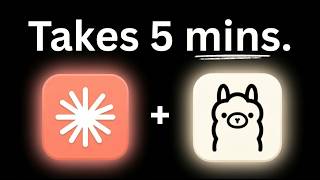
Ollama + Claude Code = 99% CHEAPER
Tutorial on integrating Ollama (local LLM runner) with Claude Code to offload cheaper tasks to local models and dramatically reduce API costs.
Details
- Core claim: running local models via Ollama for routine Claude Code tasks cuts costs by roughly 99%
- 97K views and 2.9K likes — second highest performer this week, indicating cost is a top concern
- 335 comments suggest active community discussion about which tasks to offload locally vs keep on Claude
- 11K view delta shows continued growth — still being discovered

Hitting Claude Code Limits? Here Are My Best Tips.
Shorter companion piece to the 18 token hacks video, focused on strategies for dealing with Claude Code rate limits and usage caps.
Details
- Limited transcript data — likely covers rate limit workarounds and usage optimization
- 47K views but only 1.9K delta suggests most viewers came from the initial push
- Complements the more detailed 18-hack video as a quick-reference version

18 Claude Code Token Hacks in 18 Minutes
Rapid-fire walkthrough of 18 specific techniques for reducing token consumption in Claude Code, covering prompting strategies, context management, and workflow optimizations.
Details
- 18 distinct token-saving techniques packed into 18 minutes — designed as a practical checklist
- 119K views and 4.7K likes — third highest performer, confirming token efficiency is a top community pain point
- 367 comments indicate high engagement and likely community-contributed additional tips
- 9K view delta shows sustained organic discovery

Claude Code Just Gave Everyone Virtual Pets (April Fools?)
Coverage of Claude Code's April Fools feature — virtual pets inside the terminal — with speculation on whether it hints at persistent agent personality/state.
Details
- April Fools timing (April 1st) but 186 comments suggest genuine community engagement about the feature
- 23K views — lowest performer this week, as expected for novelty content
- Interesting signal: even joke features in Claude Code get significant coverage, showing how central the tool has become
NetworkChuck
Chuck is covering the consumer-facing AI wave — local models on phones, celebrity-backed AI tools, and Anthropic platform drama. He's playing the accessible tech explainer role, bridging normie audiences to real AI capabilities.
Gemma 4 running locally on an iPhone without internet (fast enough for real-time Japanese translation) signals that on-device AI is crossing the usability threshold for real apps.


Gemma 4 on the iPhone (local AI, no internet required)
Hands-on demo of Google's Gemma 4 model running locally on an iPhone with no internet connection, including real-time Japanese translation from a pill bottle.
Details
- Gemma 4 runs fully offline on iPhone — no cloud, no internet required
- Demo includes real-time Japanese text translation from a physical pill bottle — practical multilingual OCR use case
- 292K views and 16.6K likes — highest like count across all channels this week
- 59K view delta indicates massive viral growth — still accelerating
- Chuck frames this as 'magic' — the UX threshold for on-device AI is being crossed

Anthropic says NO MORE OpenClaw!!
Coverage of Anthropic shutting down or restricting OpenClaw (likely a community project or API usage pattern), sparking debate about platform control and developer access.
Details
- 265K views and 1,000 comments — the comment count is the highest across all videos this week, indicating controversy
- 23.8K view delta shows sustained interest beyond the initial news cycle
- 10K likes — strong engagement suggesting the community has strong opinions on Anthropic's decision
- Limited transcript data — specific details about what OpenClaw was and why Anthropic acted not extractable
Cole Medin
Cole is building Archon into an open-source 'harness builder' for AI coding agents and layering persistent memory systems on top of Claude Code. His current thesis: the real leverage isn't in the model — it's in the orchestration layer and the memory that accumulates between sessions.
Archon has evolved from an agent framework into a harness engineering platform — Cole is betting that building the scaffolding around coding agents (memory, multi-agent coordination, knowledge bases) is where the defensible value lives.

Full Archon Guide - Build AI Coding Harnesses That Actually Ship (LIVE)
Full live walkthrough of Archon, Cole's open-source platform for building AI coding harnesses — covering what harness engineering is, why it matters, and how to build one from scratch.
Details
- Archon is positioned as the first open-source harness builder for AI coding agents
- Live stream format — 0 views at capture time suggests it was just published or still streaming
- Harness engineering is framed as a distinct discipline from prompt engineering — it's about the scaffolding around the model
- Cole positions this as 'the next evolution' of Archon, suggesting significant architectural changes from prior versions

I Built Self-Evolving Claude Code Memory w/ Karpathy's LLM Knowledge Bases
Cole implements Karpathy's viral knowledge base concept but feeds it with his own Claude Code session data instead of external articles, creating memory that improves itself over time.
Details
- Key insight: the most valuable raw data isn't external articles — it's your own coding sessions and interactions
- Built on Karpathy's architecture: raw data in, LLM compiles into interconnected wiki, health checks maintain consistency
- 44K views and 21.8K view delta — growing fast, nearly 50% of views came in the latest measurement period
- 1.5K likes and 118 comments show strong developer engagement
- Self-evolving aspect means the memory gets better without manual curation — the LLM maintains its own knowledge graph

I Taught My Second Brain to Run Multi-Agent Coding Workflows (Live Session)
First public demo of Archon's multi-agent orchestration capabilities — showing how Cole's AI second brain coordinates multiple coding agents on complex tasks.
Details
- This is the first public look at Archon's next evolution — multi-agent coding workflow orchestration
- Live session format showing real usage, not just explanation
- 6.7K views and 314 delta — lower engagement suggests the live/long-form format limits reach
- Positioned as 'a way you've never seen before' to orchestrate coding agents — likely involves specialized agent roles

Full Guide - Build Your Own AI Second Brain with Claude Code
Step-by-step guide to building a personal AI assistant with Claude Code that monitors your email, calendar, and tasks every 30 minutes and learns your preferences over time.
Details
- The second brain checks email, calendar, and tasks on a 30-minute polling cycle
- It drafts replies in Cole's voice and anticipates needs based on accumulated context
- 36.5K views and 954 likes — solid engagement for a deep technical tutorial
- This is the foundation that the later self-evolving memory and multi-agent videos build on
- Practical for any developer who wants a persistent AI assistant beyond single-session Claude Code usage
Chris Koerner on The Koerner Office Podcast
Chris is in full 'build and sell' mode — using AI tools like Replit Agent to ship apps fast, and pitching low-barrier AI services (missed-call text-back, product sourcing) to small businesses. His angle is always revenue-first: what can you build and charge for this week?
The easiest AI-to-revenue path right now may be selling simple automation (like missed-call text-back via GoHighLevel) to local businesses — low technical bar, high perceived value, recurring revenue.

I Built an App the Government Doesn't Want You to See
Chris built an app using government data (likely public records or spending data) with Replit Agent and hit rate limits from real user traffic — demonstrating the build-fast-ship-fast approach.
Details
- Built with Replit Agent 4 — Chris is using AI coding tools for rapid app development
- Hit rate limits from actual traffic, suggesting the app found real demand quickly
- 19.8K views — moderate reach but the 'government data' angle drives curiosity clicks
- Update in description notes he's fixing the rate limit issue — real production problems from a real launch

The Most Profitable Business Everyone Overlooks
Deep dive into agricultural spray drone businesses — how to start one, the economics, and why it's an overlooked high-margin opportunity in 2026.
Details
- Focused on DJI spray drones for agricultural applications
- 38K views and 21.6K view delta — over half the views came in the latest period, strong growth
- Tags include 'drone business', 'spray drone business', 'agricultural drone' — this is a physical business opportunity, not software
- Not directly AI/software relevant but signals Chris's audience is interested in non-tech business models

This Might Be the Easiest Way to Sell AI to Businesses
Tutorial on selling missed-call text-back automation to local businesses using GoHighLevel — positioned as the lowest-barrier entry to selling AI services.
Details
- GoHighLevel is the platform — specifically the missed-call text-back automation feature
- Positioned as the easiest AI service to sell because business owners immediately understand missed calls = lost revenue
- 39K views and 1.4K likes — solid engagement for a how-to-sell video
- Tags focus on 'how to get clients' and 'sms automation' — this is a sales playbook, not a technical tutorial
- 4K view delta suggests steady but slowing growth

This AI Finds Cheap Products You Can Sell for 5x More
Sponsored walkthrough of Accio 2.0, an AI-powered product sourcing tool that finds arbitrage opportunities across Alibaba, AliExpress, and other platforms.
Details
- Accio 2.0 is the tool — an AI product sourcing platform for ecommerce arbitrage
- Prompt-based interface: you describe what you want to sell and it finds sourcing options
- 131K views but only 1.9K delta — initial viral spike has plateaued
- 898 likes and 32 comments — lower engagement ratio suggests the sponsored content is less sticky
- Targets Amazon FBA, Shopify, and Facebook Marketplace sellers
Tools & Tech Mentioned
Central topic across multiple channels — tutorials on cost optimization, token hacks, planning upgrades, memory systems, and harness engineering. Treated as the primary AI coding tool by both Nate and Cole.
From: Nate Herk | AI Automation, Cole Medin
Tutorial on integrating Ollama with Claude Code to offload cheaper tasks to local models, claiming 99% cost reduction for certain workflows.
From: Nate Herk | AI Automation
Cole's open-source harness builder for AI coding agents — evolved from an agent framework into a platform for building coding harnesses with multi-agent orchestration.
From: Cole Medin
Hands-on demo running Google's Gemma 4 locally on iPhone with no internet — real-time translation demo. Framed as a breakthrough in on-device AI usability.
From: NetworkChuck
Referenced as the knowledge base frontend for implementing Karpathy's LLM knowledge base approach with Claude Code.
From: Nate Herk | AI Automation
Used by Chris Koerner to rapidly build and ship a government data app — positioned as a fast prototyping tool for non-technical or speed-focused builders.
From: Chris Koerner on The Koerner Office Podcast
Platform for building and selling AI automation services to local businesses, specifically missed-call text-back workflows.
From: Chris Koerner on The Koerner Office Podcast
AI product sourcing tool for ecommerce arbitrage — sponsored content, prompt-based interface for finding products to resell.
From: Chris Koerner on The Koerner Office Podcast
Viral concept from Andrej Karpathy — using LLMs to compile raw articles into interconnected wikis with health checks. Both Nate and Cole built on this idea, applying it to Claude Code workflows.
From: Nate Herk | AI Automation, Cole Medin